A reception dress isn’t something every bride needs, but for a lot of them, it turns out to be one of the best calls they make. It lets you protect your ceremony gown, move freely on the dance floor, and give your guests a second showstopping moment.
Here’s what to think about if you’re weighing a second look, straight from the stylists at Sophia’s Bridal and Tux.
Why More Brides Are Choosing A Second Dress
A reception dress gives you one thing your ceremony gown often can’t: complete freedom to enjoy your own party.
Once the vows are done and the portraits are finished, the last thing you want is to worry about a cathedral train catching on the dance floor or a structured bodice getting uncomfortable four hours into the celebration. A reception dress solves that, and it gives you a fresh look for the next chapter of the night.
Brides tend to land on a second dress for one of two reasons. The first is style: a lot of brides want something sexier, glitzier, or more fun and trend-forward than their ceremony gown, maybe a shimmering slip or a bold, less traditional silhouette. The second is comfort: changing into something easier to move and dance in makes the rest of the night feel completely different.
It’s become a much more common choice in recent years, as brides increasingly treat the reception as its own fashion moment rather than an afterthought. If you’ve been wondering whether it’s worth it, you’re in good company.
What Makes A Great Reception Dress
The best reception dresses are different from ceremony gowns in ways that actually matter once you’re living in them for a few hours, not just shorter versions of the same silhouette.
A few things to look for:
- A lightweight fabric like chiffon or satin to keep you comfortable through a long evening
- A simpler silhouette you can move in and manage on your own
- Shimmering or embellished details, which catch the light beautifully on the dance floor, in photos, and on video
Satin is sleek and photographs beautifully, chiffon is light and breathable, lace brings in romance and texture, and crepe holds its shape through hours of dancing without wrinkling. Any of these can work depending on your venue and the feeling you’re going for.
Length comes down to personal taste, but a lot of our brides land on full-length for their second look too, especially since a bustle takes care of the dance-floor and movement concerns a shorter hem might otherwise solve.
Many brides doing two looks choose two gowns, so the reception dress still gets its own full moment, just in a different silhouette, fabric, or feeling than the first. Tea-length can suit a vintage or outdoor setting, and a shorter style still has its place for a high-energy, dance-focused reception if that’s genuinely the vibe you’re after.
Colored gowns, in blush, champagne, sage, and deeper jewel tones, have also become a beautiful way for brides to show more personality once the ceremony formality winds down. If you’re not sure yet what feeling you’re going for, our bridal style quiz is a fun, low-pressure way to start narrowing it down.
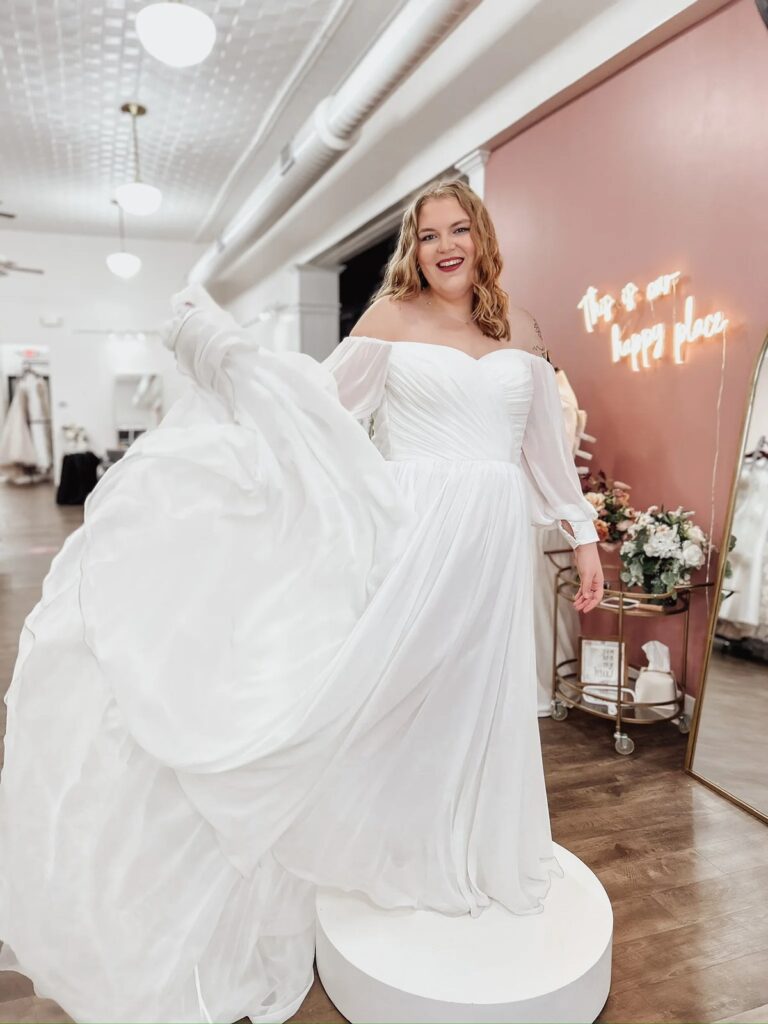
Reception Dress Styles For Every Wedding Vibe
The right reception dress matches your venue, your energy, and the version of you who shows up once the ceremony is behind you. Here are a few directions that cover nearly every wedding setting:
Sleek Mini
Clean lines, minimal embellishment, above the knee. A natural fit for rooftop receptions, modern galleries, and industrial-chic venues, and built for a night on the dance floor.
Lace Gown
Romantic and textural without being heavy. Beautiful for garden parties, vineyard weddings, and outdoor ceremonies that carry into a warm evening.
Satin Slip
Understated and effortlessly chic. Suits intimate dinner receptions, art-deco ballrooms, or anyone who wants their second look to feel simple rather than elaborate.
Embellished Cocktail Dress
Beading, sequins, or lace detail, for black-tie or formal receptions where the photos need a little more sparkle.
Flowy Boho Maxi
Relaxed and soft, often in a natural or off-white tone. At home at barn weddings, beach ceremonies, and open-air venues.
If any of these catch your eye, our bridal gown collection is a good place to start browsing, and our blog has more style inspiration if you want to keep exploring.
How To Style Your Reception Dress
Styling a reception dress well is about creating a look that feels like its own moment, not just a change of clothes.
Hair
If you wore an updo for the ceremony, letting it down into loose waves or a relaxed half-up style is an easy way to signal a fresh look, and it makes a real difference in photos.
Jewelry
Let your neckline guide you. A strapless or deep-V dress is the moment for a statement necklace or bold earrings you didn’t want competing with your ceremony look. A simple high neckline often looks best with something delicate, or nothing at all.
Shoes
Swap your ceremony heels for something you can actually dance in. Block heels offer stability, and embellished flats look beautiful in photos while keeping you comfortable for the rest of the night.
Accessories
A clutch change can match the new vibe, and if your reception moves outdoors as the evening cools, a fitted blazer or wrap keeps you warm without covering up your dress.
Makeup
You don’t need a full redo, just a deeper lip color or a touch more highlighter to carry your look into evening territory.
One thing worth keeping in mind: your second look should still fit the feeling of your reception. A black-tie evening calls for a little more polish even in a shorter dress, while a garden party welcomes something lighter and easier.
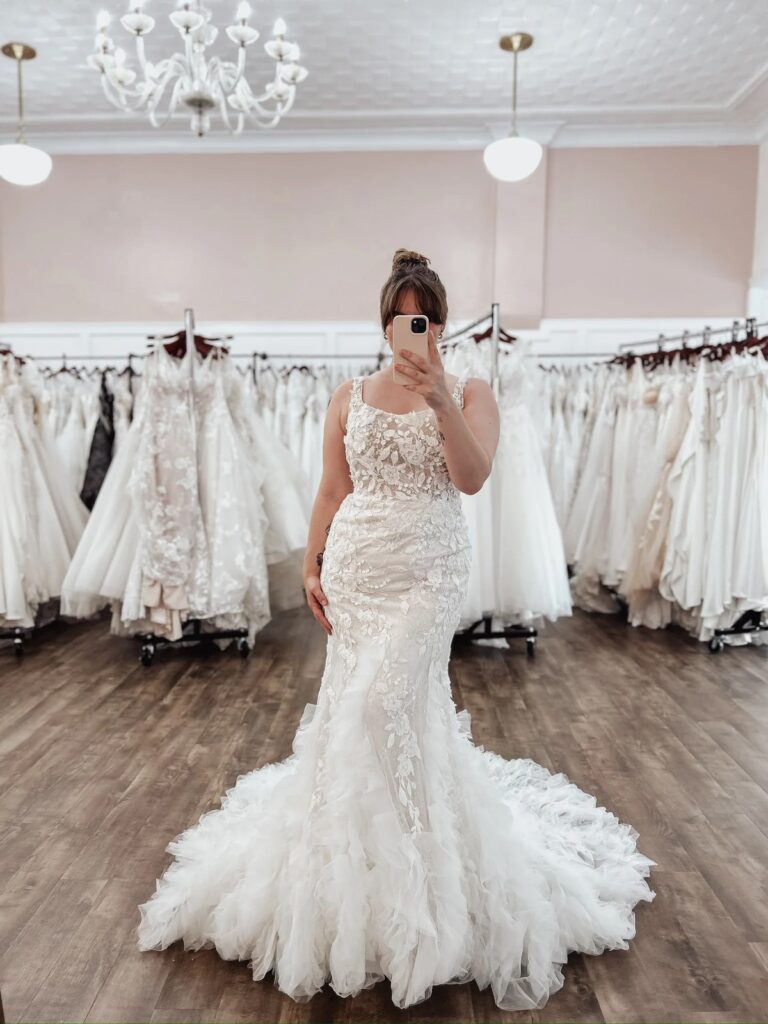
Can You Re-Wear A Reception Dress Later?
Yes, and a lot of brides plan for exactly that from the start.
Shopping with a stylist who actually listens makes a real difference here. When someone’s guiding you through options based on how you actually live, you’re far more likely to land on a piece you’ll reach for again instead of something that only ever reads as “wedding.”
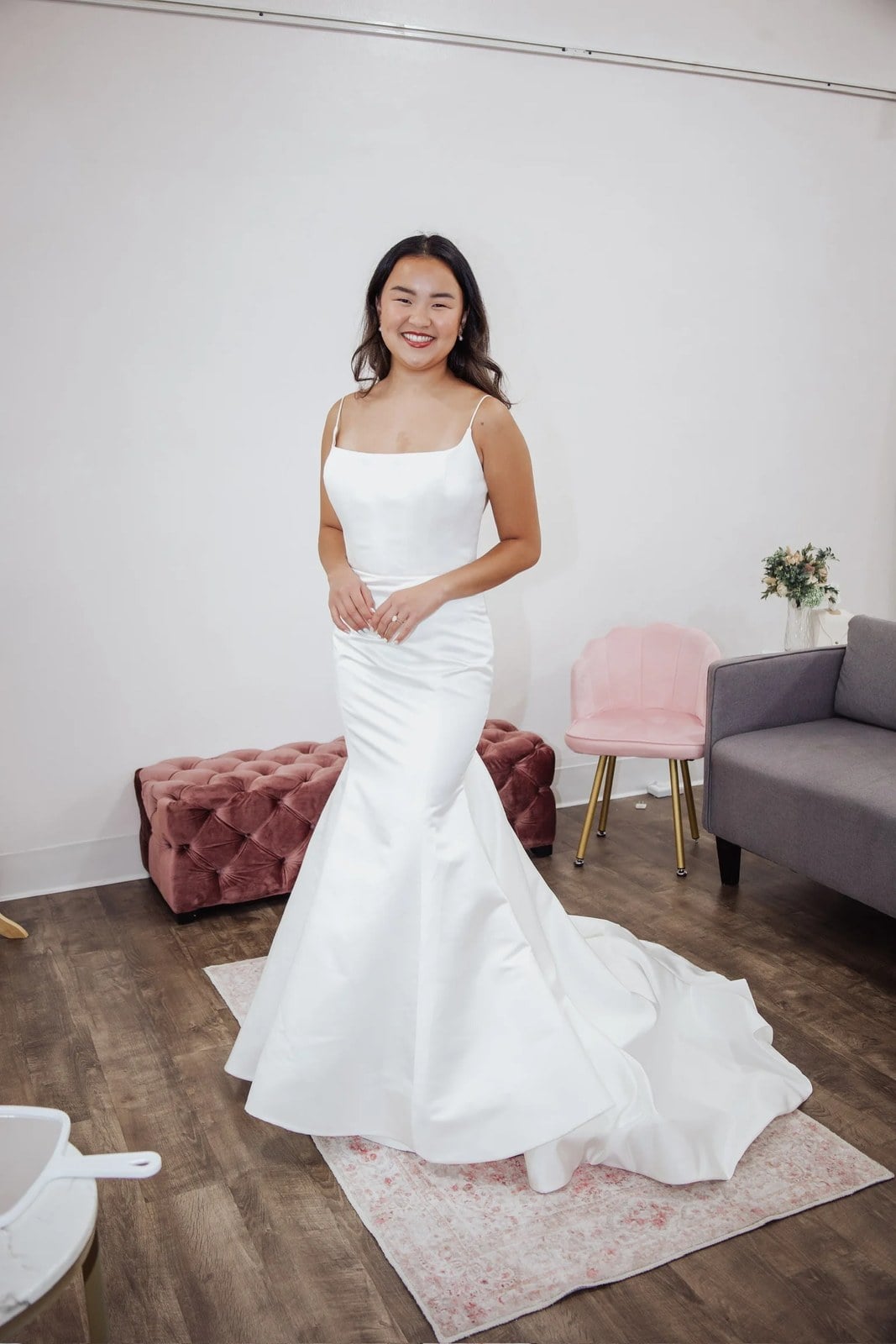
This is especially true for a little white dress style second look, since the simpler, less overtly bridal shape tends to transition easily into other occasions. If one’s available at your Sophia’s location, it’s worth asking your stylist about. A sleek satin slip in ivory or champagne can be dressed up with a blazer for a rehearsal dinner or worn to a formal event down the road. A lace midi in blush or dusty rose works beautifully for anniversary dinners or as a wedding guest dress. An embellished cocktail dress in a non-bridal color is essentially a forever piece for formal occasions.
A few things that help with re-wear:
- Choose a color that reads as party wear rather than bridal: champagne, blush, sage, or a bold jewel tone
- Skip the most overtly bridal details, like floral appliqué or a cathedral train
- Prioritize fabric quality so the dress holds its structure across more than one wearing
- Consider light alterations after the wedding if you want to refresh the fit
A reception dress chosen with this in mind tends to show up again and again: anniversary dinners, galas, holiday parties, even as a guest at someone else’s black-tie wedding.
What Should Guests Wear To A Wedding Reception?
Guests should take their cue from the dress code on the invitation, or from the venue and time of day if nothing is specified.
| Dress Code | What To Wear | What To Avoid |
|---|---|---|
| Black Tie | Floor-length gown or formal cocktail dress | Anything casual or overly flashy |
| Cocktail Attire | Knee-length or midi dress | Overly casual fabrics like linen or denim |
| Garden Party | Floral midi, tea-length dress, or a tailored jumpsuit | Heavy fabrics, dark or wintery tones |
| Casual | Sundress, floral wrap dress, or polished separates | Jeans, overly revealing styles |
One rule holds across every dress code: guests should avoid white, ivory, baby yellow and champagne tones. Those shades belong to the bride, and wearing them, even in a soft print, can read as competing with the person the day is actually about.
A black dress is a reliable choice in almost any setting and can be dressed up or down depending on the formality of the event.
The real difference between a bride’s reception dress and a guest’s is intent. A bride’s second look is about freedom to celebrate and a fresh fashion moment. A guest’s job is to look polished, respect the dress code, and let the spotlight stay where it belongs.
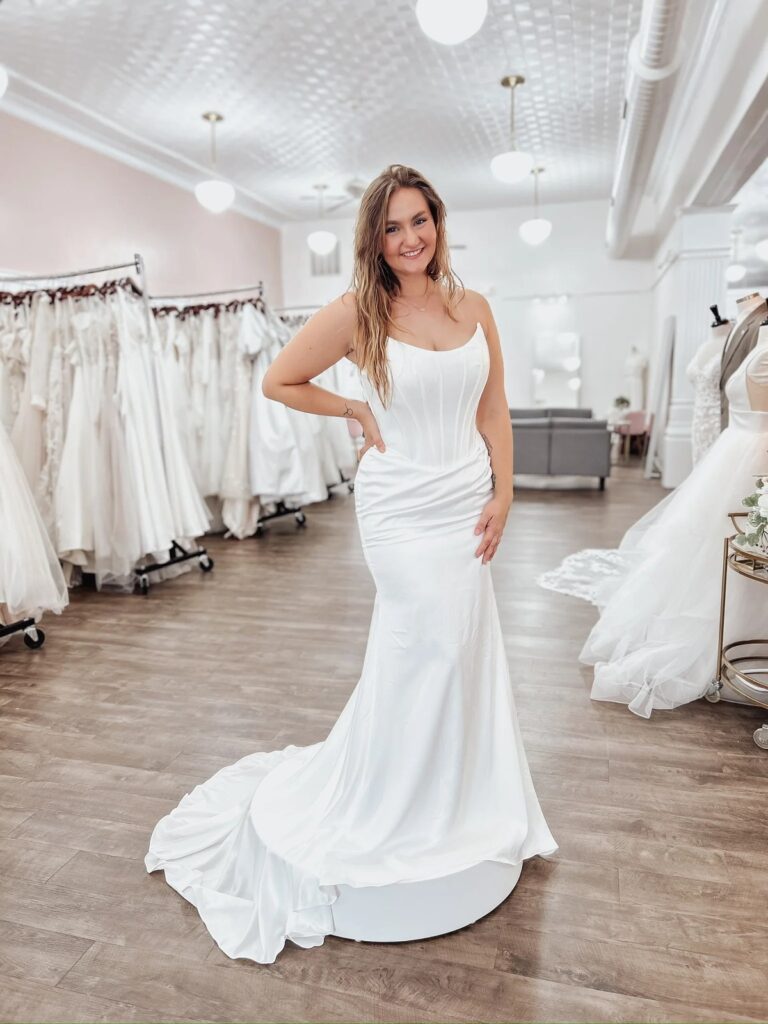
FAQs About Reception Dresses
What is appropriate to wear to a wedding reception?
For guests, it depends on the dress code. Black-tie events call for a floor-length gown or a formal cocktail dress, cocktail receptions typically mean a knee-length or midi dress, and garden or casual receptions welcome a floral midi, sundress, or tailored jumpsuit. Guests should avoid white, ivory, and champagne tones out of respect for the bride. When in doubt, the invitation or the couple themselves are the best source.
How should I style a wedding reception dress?
Think of it as creating a fresh, elevated look rather than just changing clothes. Swapping an updo for loose waves, moving into block heels or embellished flats for dancing, and upgrading jewelry or a clutch for evening are all easy ways to shift the look. If your reception moves outdoors, a wrap or tailored jacket adds comfort without hiding the dress.
Can I re-wear a reception dress after the wedding?
Yes, and plenty of brides plan for it from the start. A sleek satin slip, a lace midi, or a cocktail dress in a non-bridal color can be re-worn to anniversary dinners, galas, or black-tie events for years. Timeless silhouettes and good fabric go a long way, and light alterations after the wedding can refresh the fit for a new occasion.
What’s the difference between a wedding dress and a reception dress?
A wedding dress is worn during the ceremony and tends to be more formal and structured. A reception dress, sometimes called a second wedding dress, is chosen specifically for the party portion of the day: it’s a chance to show more personality through style, sparkle, or a different silhouette, often paired with a bustle so dancing and movement are never an issue, whatever the length.
Do I need a separate dress for my reception?
Not at all, it’s entirely a personal choice. A separate dress protects your ceremony gown, allows for a dramatic style change, and lets you move freely on the dance floor. If your ceremony dress already feels comfortable for a party, there’s no need to change a thing. But if a big reveal moment or dancing all night matters to you, it’s worth exploring.
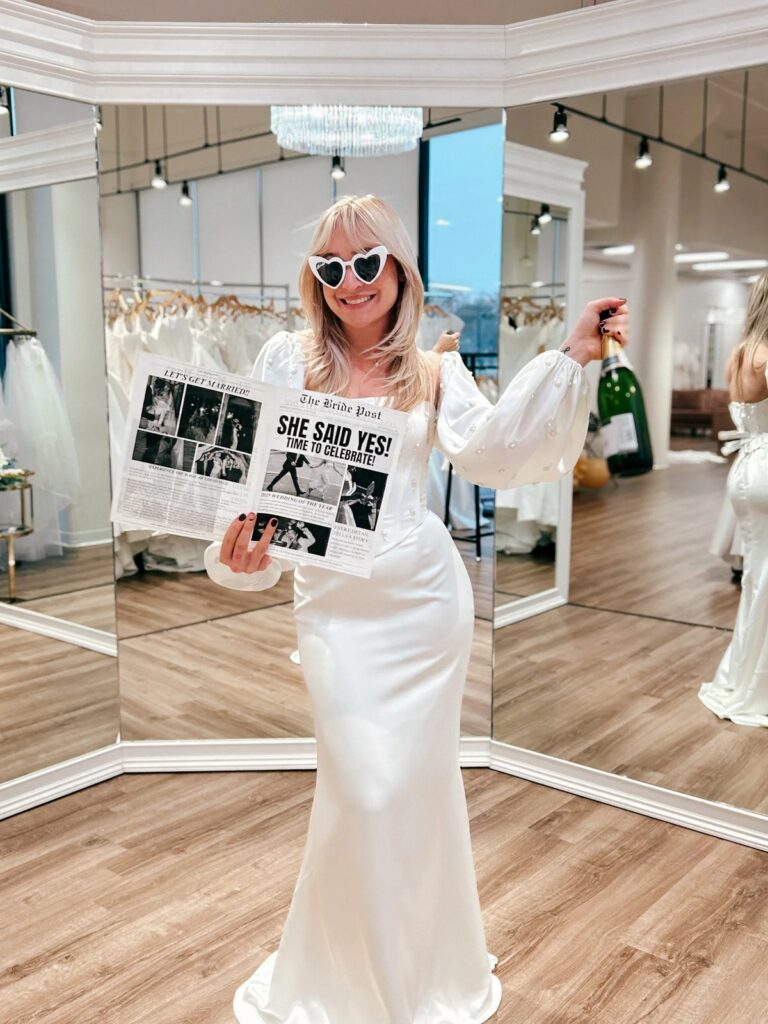
Find Your Reception Dress At Sophia’s
There’s no single right way to approach your reception look, and that’s exactly the point. Whatever you’re drawn to, our stylists are there to help you find it, not steer you toward it.
Stop by our Southport, Indianapolis location , or any of our other locations, and let’s talk through what fits your day, your venue, and how you want to feel when the dancing starts. Every bride is welcome at Sophia’s, exactly as she is. Make an appointment and we’ll take it from there.