Finding the right elopement dress means choosing something built for a real moment, not a grand production. If your vows are happening on a mountaintop, at a courthouse, or on a quiet beach, the right dress should feel like it belongs there with you.
This guide from Sophia’s Bridal and Tux walks through the styles, fabrics, and styling choices that tend to work best, so you can focus on the day itself.
Key Takeaways
- Elopement dresses prioritize comfort and ease of movement over the structure of a traditional bridal gown, so choose your setting first and your style second.
- Fabric is one of the most practical decisions you’ll make. Chiffon, crepe, and stretch jersey travel well and perform in most outdoor conditions, while heavily structured satin and boned corsets create packing and comfort challenges.
- Your total elopement look costs more than the dress alone, so factor in shoes, jewelry, and alterations alongside whichever budget tier fits your vision.
- A personalized appointment with a stylist who listens before pulling anything can help you find clarity faster than shopping solo, especially when you’re not yet sure what you’re looking for.
What Makes An Elopement Dress Different
An elopement dress is any wedding dress chosen for an intimate, small, or private ceremony. The term covers a wide range of looks, but what separates it from a traditional bridal gown comes down to priorities.
Traditional gowns are often built around structure: heavy boning, layers of crinoline, cathedral trains, and dramatic entrances. Elopement dresses flip that. They favor comfort and ease of movement, and they’re typically lighter, easier to get in and out of without help, and simpler to travel with.
Nearly half of engaged couples are considering a smaller-scale celebration like a microwedding or elopement, according to The Knot Worldwide’s wedding trends research, a share that climbs even higher among couples actively planning right now.
There’s no single right answer for what to wear. Some brides go for something short and playful. Others want a full-length gown with lace details and a long skirt, just without the corset and the train. Some elopement dresses are barely distinguishable from traditional wedding dresses in photos, but they move differently and feel completely different to wear. What makes a dress an elopement dress isn’t a specific length or fabric, it’s that the dress serves the moment rather than the other way around.
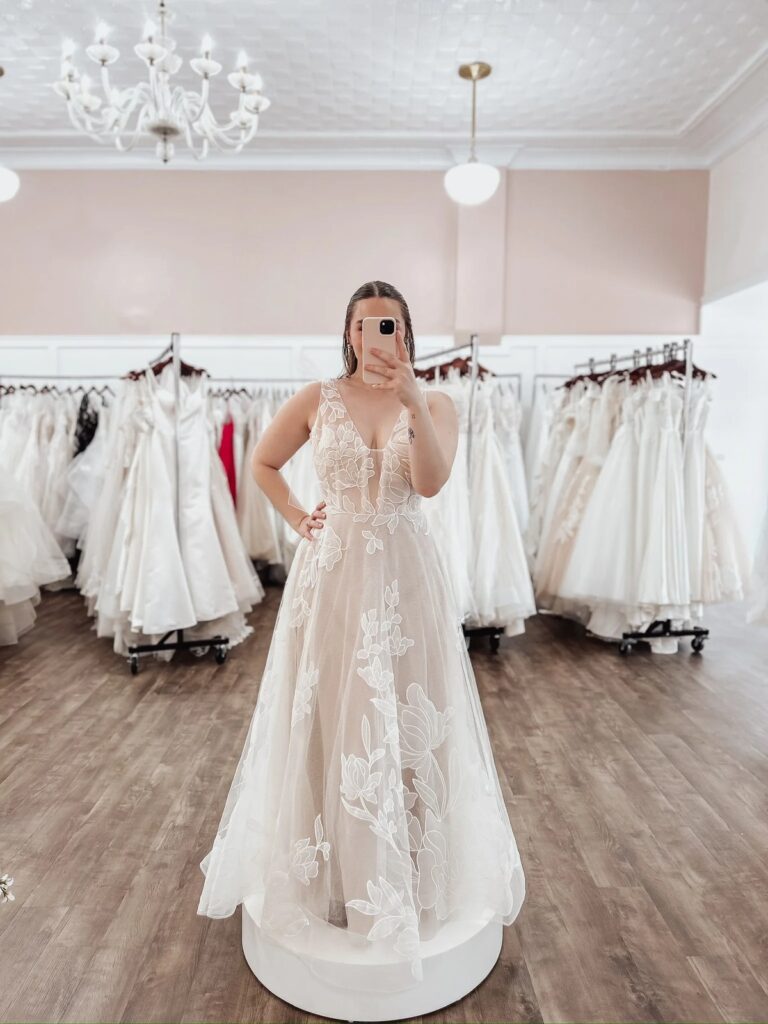
A Quick Look At Elopement Dress Styles
| Style | Best For | Silhouette |
|---|---|---|
| Flowy chiffon | Beach ceremonies | A-line, full-length |
| Minimalist crepe sheath | Courthouse or any indoor setting | Sheath, floor-length |
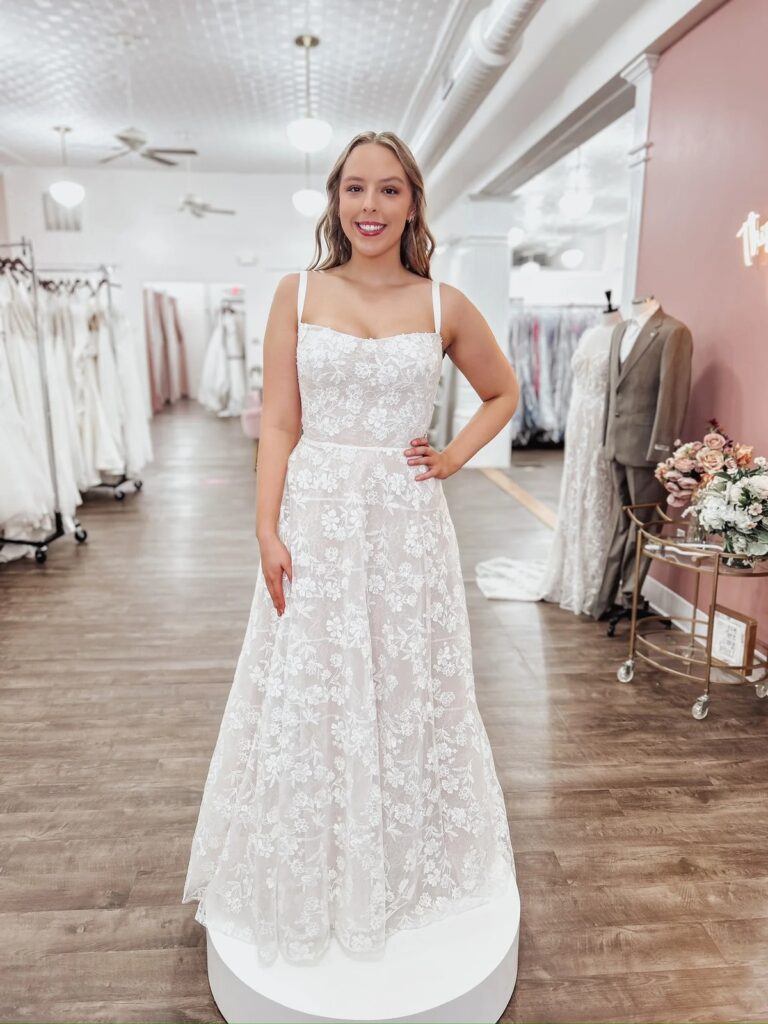
| Lace boho maxi | Forest or garden settings | A-line, full-length |
| Short ruffle dress | City or casual ceremonies | Mini, above knee |
| Simple satin slip | Nearly any setting | Slip, bias cut |
| Blush or sage gown | Brides who want a non-white look | Any silhouette |
More detail on each of these is below, and our blog has more style inspiration if you want to keep browsing.
What To Think About When Choosing Your Dress
A few things matter more for an elopement dress than they do for a traditional gown.
Can you actually move in it?
For an outdoor or adventure elopement especially, this is the big one. A dress that looks beautiful in photos but keeps you from sitting, kneeling, or walking comfortably isn’t serving you. It’s worth trying to move the way you’ll actually move that day: climb a step, hug someone, sit down.
Does the fabric suit your setting?
Lightweight chiffon drapes beautifully in a coastal breeze but can cling in humidity. Crepe holds its shape well in most conditions. Stretch satin resists wrinkling better than a rigid duchess satin. Lightweight tulle adds volume without much weight, but it catches wind. Bottom line, if you feel confident, comfortable, beautiful, and like a bride in it, that’s what matters!
Does it fit you the way you actually need it to?
Every bride deserves a dress that feels like it was made for her, not one she has to compromise around. A good stylist will ask about your setting and how you want to feel, then help you find sizing and options that genuinely work, rather than steering you toward whatever happens to be in stock.
There are two ways to get your dress, and your stylist will walk you through which makes sense for your timeline. A special order gown is made to your measurements, with two stylists double-checking against the size chart together and confirming everything with you before it’s ordered based on your largest measurement, then alterations take it in from there for a fit that’s completely yours.
These typically take four to six months to arrive, plus a couple more for alterations, so it’s worth starting that conversation early. If your timeline is tighter, an off-the-rack or sample gown can go home with you the same day, and still gets the same alteration care to make it feel made for you.
If you’re not sure yet what direction you’re even leaning, our bridal style quiz is a fun, low-pressure way to start narrowing it down.
Elopement Dress Styles To Consider
Minimalist Crepe Sheath
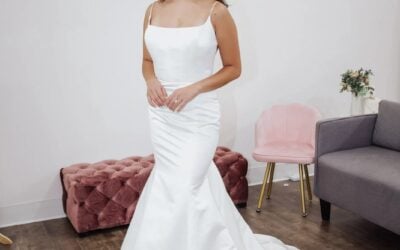
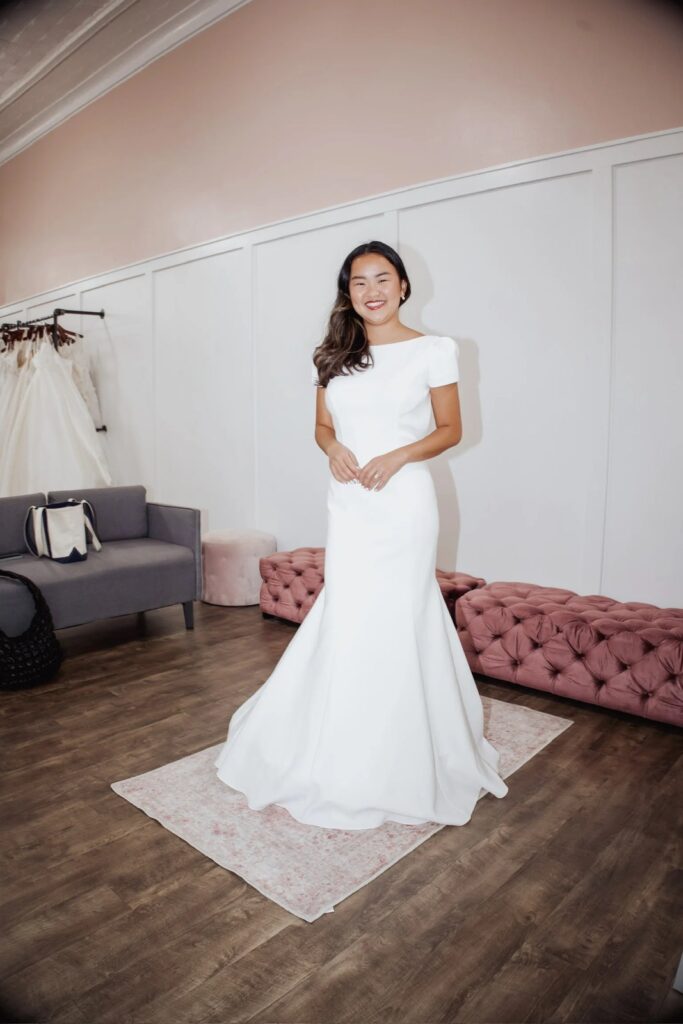
This is the most versatile elopement dress out there. A floor-length crepe sheath in ivory or soft white photographs beautifully in almost any setting, travels without much wrinkling, and feels elegant without being fussy. It works especially well for couples who aren’t sure yet exactly what setting they’re working with.
Boho Lace Maxi
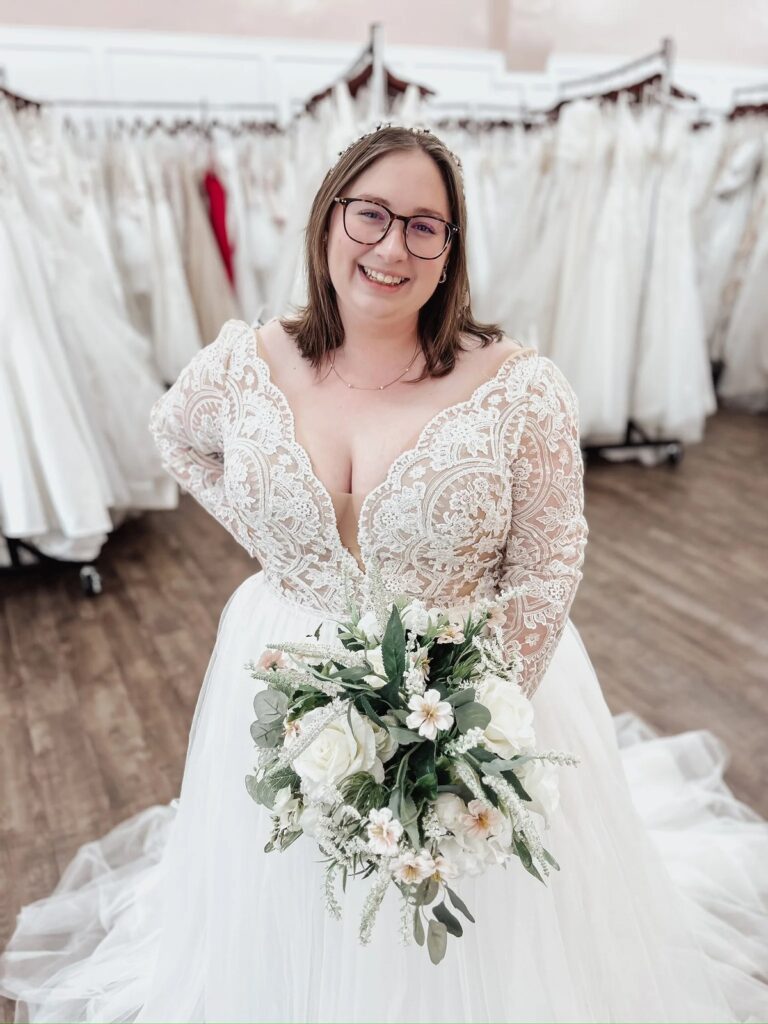
A flowy, full-length lace or lace-trimmed chiffon gown is a natural fit for garden and forest ceremonies. Look for flutter sleeves or bell sleeves that move with you rather than against you.
If you love lace, that’s what matters most, trail or no trail. This is your wedding day, and the memories and photos last far longer than the dress needs to stay pristine. A little dirt on the train or a snag in the lace isn’t something to worry about; this isn’t a coat you need to keep wearing. And if you want to hold onto it exactly as it was, we offer gown preservation packages that clean and preserve it for good.
Ruffle Mini Or Tea-Length Dress
A shorter dress, whether that’s a ruffle-hemmed mini or a clean A-line tea-length, is ideal when you want to feel celebratory but completely unencumbered. Easy to walk and dance in, and easy to pack.
Each Sophia’s location carries its own unique, limited collection of casual little white dresses, so it’s worth calling or messaging ahead to see what’s in stock at the location you’re visiting.
Flowy Chiffon A-Line
For sand, surf, and seaside settings, lightweight chiffon in an A-line silhouette handles wind, humidity, and uneven ground all at once. And if the hem’s a touch too long for the setting, that’s an easy fix in alterations.
Clean-Line Midi Or Suit-Style Gown
For a courthouse setting, you want something that reads intentional without feeling like a costume. A structured midi dress, a tailored wrap gown, or even a chic pantsuit communicates the occasion perfectly. Non-white options in champagne or blush are especially popular here. Our bridal gown collection has a range of silhouettes if you want to see what’s out there before narrowing in.
Packing And Travel Tips
If your elopement involves a flight or a long drive, fabric matters more than you’d think.
Fabrics that travel well:
- Chiffon: lightweight, resists wrinkling, folds compactly
- Jersey and stretch jersey: rolls easily and bounces back from compression
- Crepe: holds its shape after being packed flat
- Lightweight tulle: adds volume without much weight, but needs protection from compression
Fabrics that are trickier to travel with:
- Heavily structured duchess satin with boning, which can crease permanently under pressure
- Thick, rigid lace overlays, which are hard to fold without distortion
- Large multi-layer tulle skirts, which take up real suitcase space and need reshaping on arrival
A few practical tips: roll soft, unstructured dresses rather than folding them to reduce crease lines, use a garment bag for anything with lace or beading, and pack your dress last so it sits on top. If wrinkles do show up, hanging the dress in a steamy bathroom for a while usually releases them.
For a mountain elopement, consider wind too: a dress with a full, unweighted skirt can catch some real movement in an exposed, high-altitude spot, and that can actually make for incredible photos. If you’d rather it stay put, a more fitted silhouette or a dress with enough structure to drape instead of fly is an easy way to go.
Styling Your Elopement Look
Less tends to be more here, and everything you add should work with your setting, not fight it.
Veils
There’s no single right veil for an elopement, it depends entirely on your style. Some brides go full drama: a cathedral veil with a lace boho gown and a train, even at a national park. Others want something simple, like a mini blusher with a clean column dress in a forest chapel. Both are completely right, because you’re the one making the rules for your day.
Shoes
For outdoor or adventure elopements, flats, block heels, or low wedges won’t sink into sand or catch on grass. Save anything with a thin heel for courthouse ceremonies or smooth indoor settings.
Jewelry
Keep it simple, dramatic, heirloom, modern, whatever matches your vibe and bridal vision. There’s no required jewelry for an elopement, just what feels like you.
Hair
Find a hairstylist you trust, they’ll be the best guide for what works with your setting and your dress. Your Sophia’s stylist is also a great resource for vendor recommendations: after years of being part of local weddings and elopements, they tend to have the inside scoop on who to call.
And once you’ve said yes to the dress, you’ll get an invite to our private Facebook group just for Sophia’s brides, a great place to ask questions and hear what other brides have tried and recommend.
Detachable elements
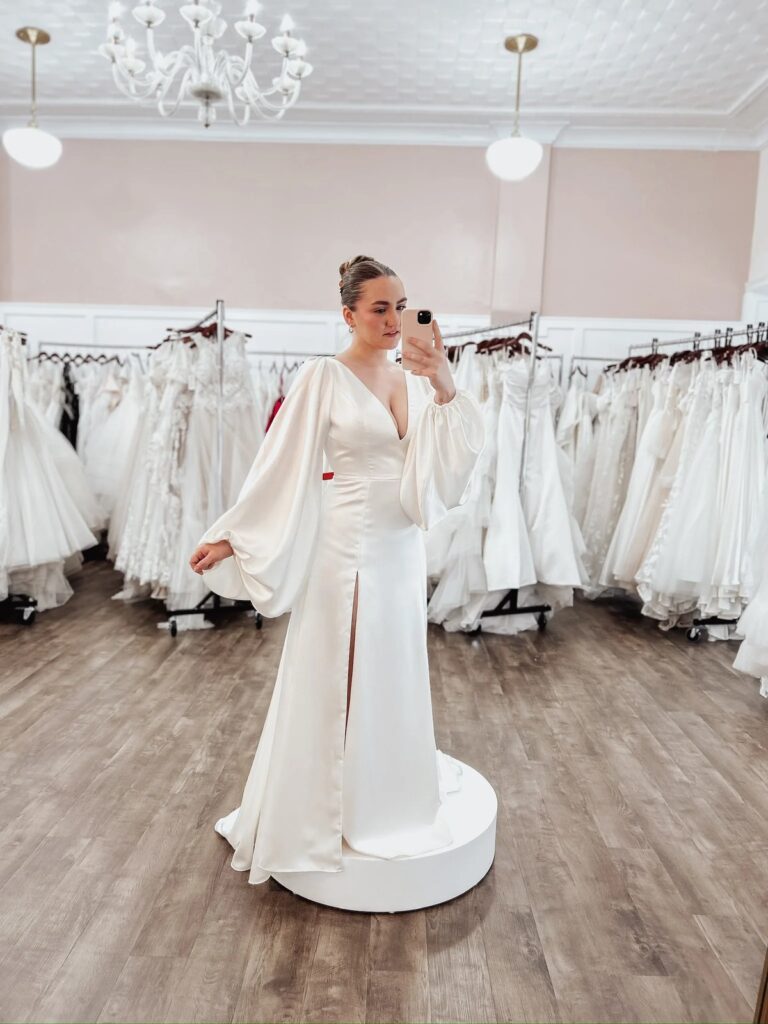
Some elopement gowns come with removable sleeves, a detachable skirt, or a snap-off train, giving you real flexibility to shift from a more formal ceremony look into something more relaxed for dinner afterward.
Budget Considerations
The dress is only part of the full look. Shoes, jewelry, a veil or hairpiece, and alterations all add up alongside it, so it’s worth thinking about the whole picture rather than just the dress price tag.
At the more accessible end, a simple ready-to-wear style or a shorter dress generally keeps the full look within easier reach. In the middle range, there’s room for a designer dress, a veil or floral crown, and a fuller alteration package.
At the higher end, you’re typically looking at designer gowns from labels like Maggie Sottero, Sottero and Midgley (their couture-inspired higher-end line), or Watters, along with premium accessories and fully custom tailoring built to last well beyond the wedding day.
If budget flexibility matters most for your elopement, it’s worth a visit to our With Love, Sophia’s location, in Columbus, specializes in discounted and sample gowns without sacrificing style. Wherever you land, a stylist who asks about your setting and your priorities before pulling anything can help you get real clarity on what you want and what it costs, instead of guessing your way through it alone.
FAQs About Elopement Dresses
What is an elopement dress?
A wedding dress chosen specifically for an intimate, small, or private ceremony. That’s traditionally meant something built for comfort and ease of movement over structure and formality, but more and more brides are doing it their own way, choosing exactly what they love most with little outside opinion involved. For a lot of brides, that means the dress becomes the statement feature of the day, the heart of the photos and the experience, not something scaled back to match the setting.
What should you wear to an elopement?
There are no rules. Most elopement brides choose something that feels personal and comfortable rather than traditionally bridal. A simple white dress, a flowy boho gown, a jumpsuit, or a tailored suit can all work beautifully depending on the setting, whether that’s a beach, a courthouse, a mountaintop, or a city rooftop. The key is choosing something you can move in freely.
Are elopement dresses easy to travel with?
It depends on the fabric. Dresses made from chiffon, jersey, crepe, or lightweight stretch satin pack easily and resist wrinkles. Heavily structured gowns with thick boning or full tulle skirts are harder to travel with. If you’re flying to your destination, lightweight fabric and a garment bag go a long way toward keeping your dress fresh on arrival.
What makes an elopement dress different from a regular wedding dress?
Elopement dresses are built with practicality and intimacy in mind. They tend to be lighter, less structured, and easier to move in than traditional gowns, often skipping heavy boning, cathedral trains, or complex underlayers in favor of breathable fabrics and cleaner silhouettes.
Find Your Elopement Dress At Sophia’s
However you’re planning to say “I do,” the dress should feel like it’s made for you and your moment, not the other way around. Our stylists take the time to understand your setting and what you want to feel like that day before they ever pull a single dress
Make an appointment to visit us at our Keystone location, or any of our other locations, to find the dress that’s completely yours!