White wasn’t always the default. For most of history, brides wore whatever color suited them best, and the all-white standard we treat today as ancient tradition is barely 180 years old. So why wear a white wedding dress at all?
The short version: one queen, one order of lace, and roughly a century of magazines repeating the same photo. The longer version covers real history, real symbolism, and real alternatives, and that’s exactly what this guide walks through.
At Sophia’s Bridal & Tux, we help brides across Indiana and Kentucky find a white wedding dress or something entirely their own, and knowing where the tradition actually came from makes that choice a lot easier.
Why Do Brides Wear a White Wedding Dress?
Why wear a white wedding dress, when for most of history brides simply wore whatever they already owned? The honest answer has nothing to do with tradition spreading gradually. It spread through one specific, very public wedding.
In 1840, Queen Victoria broke from centuries of royal wedding fashion and put a plain white gown in front of the world’s newspapers and illustrators. Her choice had nothing to do with virtue. It had everything to do with lace, personal preference, and excellent timing.
Once her wedding portrait circulated, brides who could afford it started copying the look, and white slowly moved from one option among many to the expected choice. That shift took generations, not years, and it didn’t reach most households until well into the twentieth century.
There’s no single correct answer to why brides wear white today. There’s a specific, traceable story, and it’s worth knowing before deciding whether to follow it or write your own version.
The History Behind the White Wedding Dress Tradition
The story behind why wear a white wedding dress became the norm splits into three chapters: before Victoria, the moment itself, and the long stretch afterward when white was still far from universal.
Wedding Dress Colors Before Queen Victoria
Before 1840, there was no bridal color rulebook. Brides wore their best dress, and best came in every color imaginable: red, blue, brown, even black were all common, especially among women who couldn’t justify a dress that could only be worn once. White demanded constant upkeep and wasn’t practical for anyone without household help, so for centuries it stayed rare.
There’s one genuinely old exception worth knowing. Ancient Roman brides wore white tunics paired with a red veil called the flammeum, tied to ideas of purity and protection.
That practice disappeared for well over a thousand years before white resurfaced in the 1800s for completely different reasons. The ancient-tradition story people repeat today skips a very long gap.
How Queen Victoria Popularized White in 1840
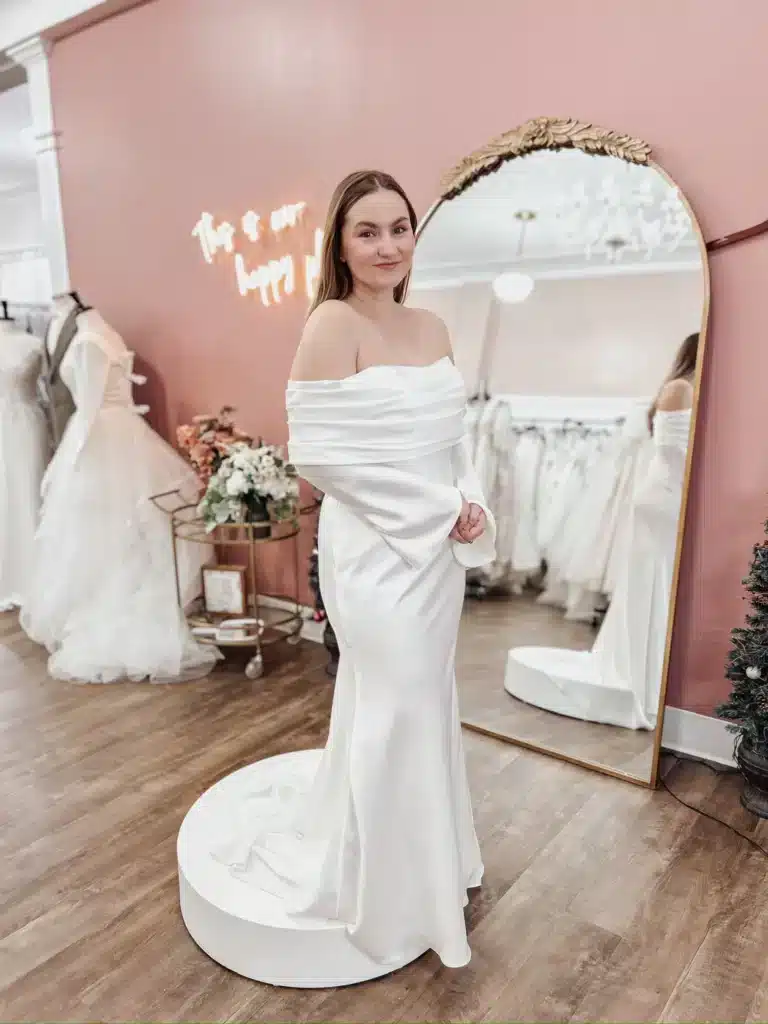
Victoria’s choice to wear white in 1840 wasn’t a fashion accident. She wanted to marry as a wife rather than appear in the crimson robes typically worn by a reigning monarch, so she skipped royal tradition entirely.
She also picked white for a practical reason. It was the best backdrop to showcase a large piece of handmade Honiton lace, a deliberate move to support English lace makers who were losing work to machine-made textiles.
None of that had anything to do with purity. Newspapers and fashion magazines covered her wedding in enormous detail, and fashion plates kept reprinting the same white silhouette until it became the look brides aspired to. If you’ve ever wondered why wear a white wedding dress turned into such a fixed idea, this is the moment it actually started.
How the White Wedding Dress Became the Standard
White stayed a luxury look for decades after Victoria’s wedding. Only wealthy brides could keep a dress spotless for one day and never wear it again, so most middle-class and working women kept marrying in colored, reusable dresses well into the 1900s.
The real shift came after World War II, when ready-to-wear manufacturing finally made mass-produced gowns affordable. That’s when the white wedding dress became the default rather than the exception.
Research suggests roughly four out of five American brides still choose white or ivory today. That makes it less an ancient rule and more a mid-century habit that stuck.
What Does a White Wedding Dress Really Symbolize?
Purity and virginity is the explanation most people reach for, and it’s also the one that gets the timeline backward. That meaning attached itself to the white wedding dress after Victoria’s wedding was already fashionable, not before. It’s a retrofit, not the original reason brides started wearing it.
There is a genuinely old root to the idea, just not a continuous one. White’s connection to purity traces back over 2,000 years to Roman brides and Vesta, the virgin goddess of hearth and home.
That thread went dormant for centuries before someone reattached it to weddings in the 1800s. It became a tidy explanation for a trend that was already popular for entirely different reasons.
White carried other meanings too, and most had nothing to do with virtue. It signaled wealth, since keeping a dress clean and unworn was expensive. It set the bride visually apart from her guests, and it came to represent a fresh start more than any specific moral statement.
A white wedding dress means something today because of everything layered onto it over 180 years. It never had one fixed, universal meaning.
How Wedding Dress Traditions Differ Around the World
White isn’t a universal bridal color. It’s a regional one, and plenty of cultures built entirely different traditions long before Queen Victoria picked up a needle and thread.
Red and Gold in Chinese and Indian Weddings
Red is the traditional bridal color across much of East and South Asia, and it isn’t a substitute for white. It’s the primary color of celebration itself.
In Chinese weddings, red represents luck, joy, and good fortune. It traditionally appears throughout the entire ceremony, not just on the bride’s dress.
In Indian weddings, red carries its own weight, tied to prosperity, fertility, and protection, often layered with religious symbolism specific to the region and family. In both traditions, white has historically been associated with mourning rather than celebration. That’s the opposite of how it functions in Western weddings.
White and Color in Japanese Wedding Ceremonies
Japanese weddings complicate the white-versus-color debate in an interesting way. Many brides wear a white kimono called the shiro-muku during the ceremony itself, symbolizing purity and the transition into a new family.
Then something shifts. Plenty of brides change into a brightly colored kimono or dress for the reception, treating white and color as two parts of the same day rather than opposing choices.
It’s a good reminder that traditional doesn’t always mean one color, no exceptions.
Modern Alternatives to a Traditional Wedding Dress
Modern brides aren’t rejecting tradition so much as realizing white was only ever one option among several. That shift shows up in two places: color and silhouette.
Popular Wedding Dress Colors Brides Are Choosing Now
Stark optical white is losing ground to warmer, softer tones. Champagne, blush, sage, and pale blue-grey are all gaining real momentum right now.
Bolder departures like black or deep jewel tones are becoming genuinely visible choices too, not just runway statements.
For brides wondering why wear a white wedding dress at all when so many colors are trending, the answer often comes down to versatility rather than obligation. Warmer tones like champagne and ivory tend to flatter a wider range of skin tones than stark white, which photographs cooler and can wash out certain complexions under bright lighting.
Non-Traditional Silhouettes and Styles to Consider
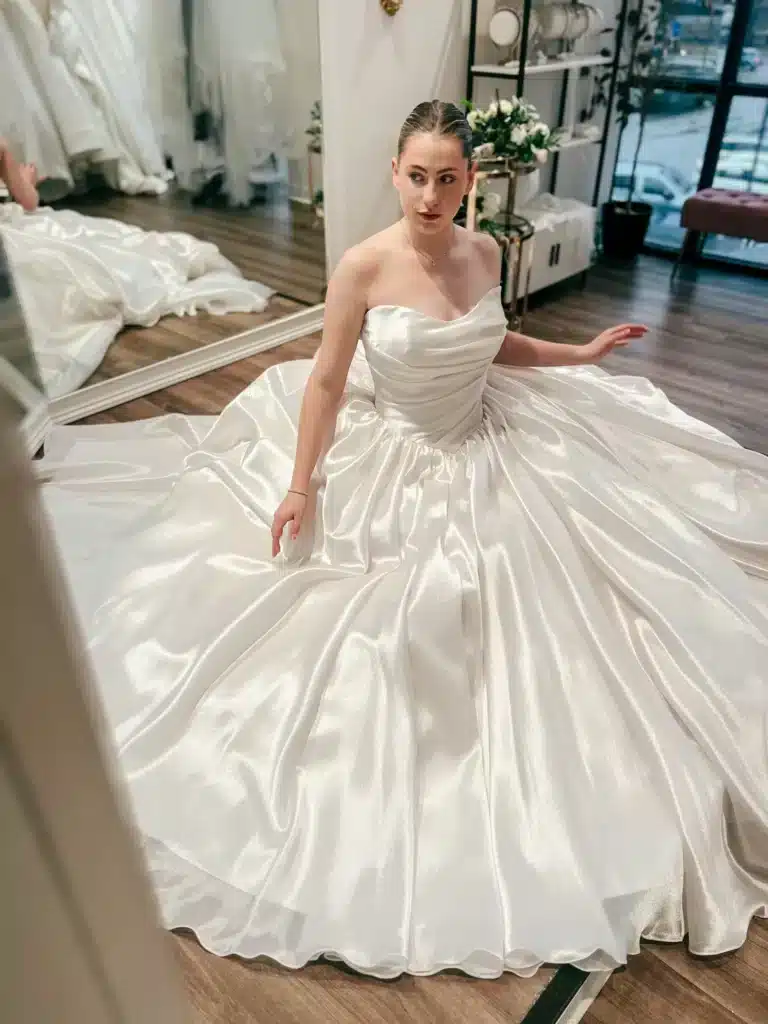
Color isn’t the only place brides are branching out. Two-piece bridal separates, jumpsuits, detachable sleeves and skirts, and simple slip silhouettes are all steadily growing as ballgown alternatives.
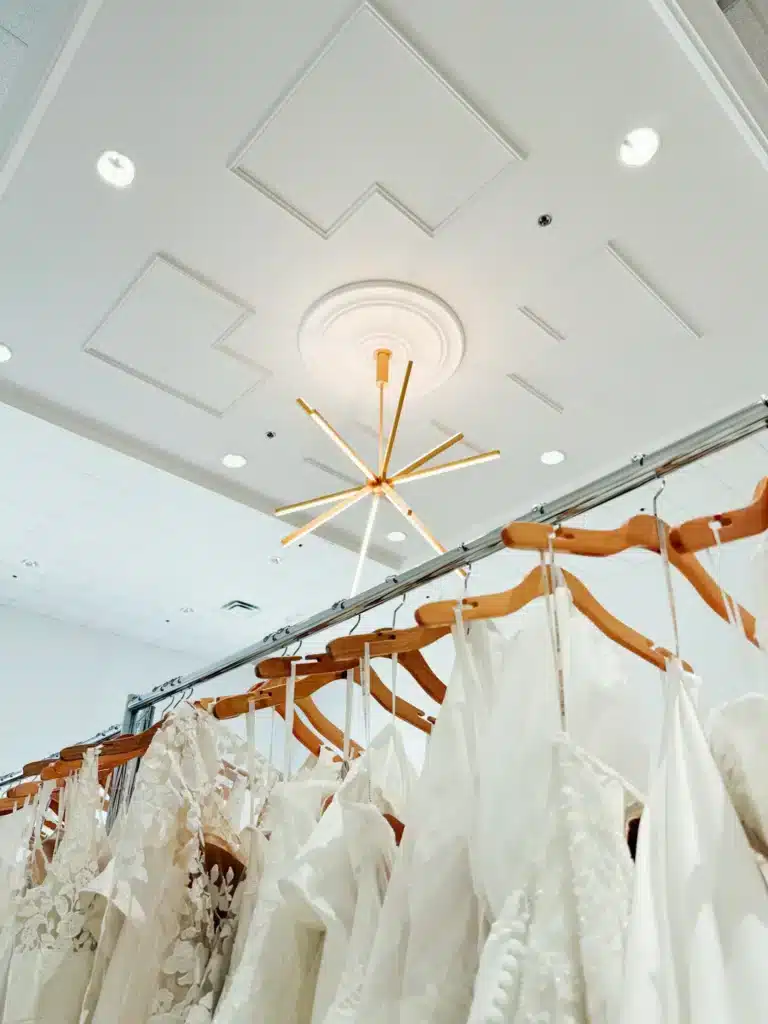
Our bridal gowns collection spans exactly that range, from classic silhouettes by Maggie Sottero to the softer, more modern shapes in our exclusive Joie Bride line. At our Columbus location, you’ll find around 350 to 400 designer gowns to browse at any time.
If you’re not sure which direction fits you yet, our bridal quiz is a quick way to narrow down a starting point before your appointment. Trying pieces on in person, not just scrolling a feed, is usually what turns maybe into yes.
Find Your Perfect Wedding Dress at Sophia’s Bridal and Tux
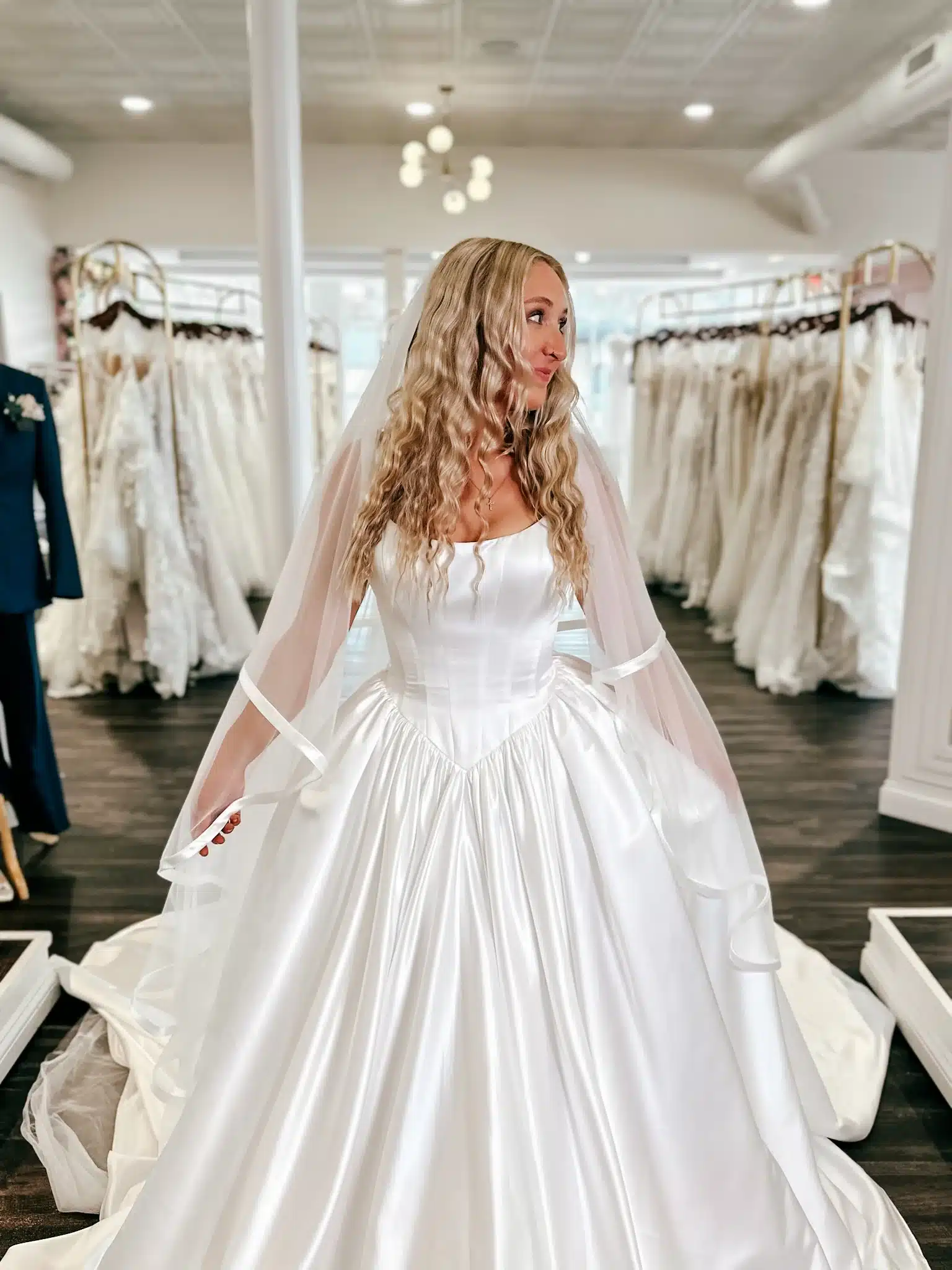
There’s no single right color or silhouette, only the one that feels right on you. At Sophia’s Bridal & Tux, we carry the styles, sizes, and shades to match, whether that’s a classic ivory ballgown or something entirely outside tradition.
Our Columbus, Indiana location is a great place to experiment with color or try a sample gown for a second look. Maybe you’d like a classic ivory for the ceremony and something more unexpected for the reception. At With Love, Sophia’s, you’ll walk out with your gown the same day, and the selection runs from classic silhouettes to plenty of unique, non-traditional styles.
Stop by our Columbus showroom to see it in person, then make an appointment when you’re ready to start trying dresses on.