
“Black tie” on a wedding invitation sounds simple until you’re standing in a fitting room, unsure if your shoulders are supposed to feel this tight.
Getting it right means understanding exactly what the dress code asks for, not guessing your way through a rental counter. This guide covers every real decision involved in buying a tux for black tie wedding occasions, from lapel style to shirt collar to timing your order so nothing feels rushed.
At Sophia’s Bridal and Tux, we fit grooms and groomsmen across Indiana and Kentucky for exactly these moments. Our styling appointments are built around getting these details right the first time.
What a Tux for a Black Tie Wedding Actually Requires
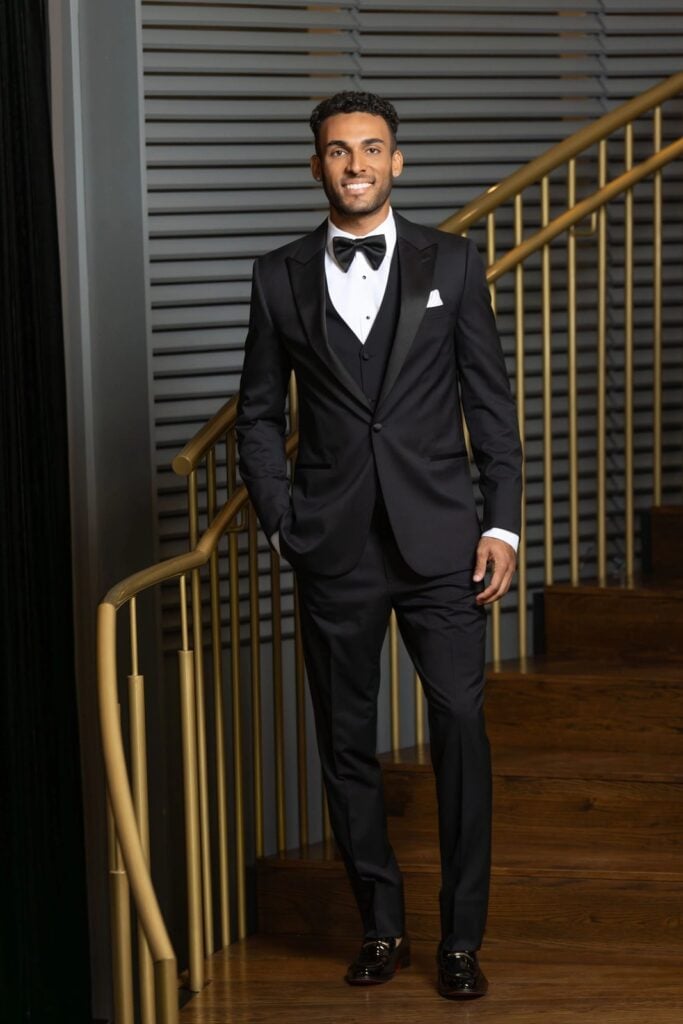
Black tie is a specific dress code, not a general “dress nice” suggestion. It sits above cocktail attire and calls for a true tuxedo: a satin or grosgrain-faced lapel, formal trousers, and a black bow tie.
That’s different from black tie optional, where a dark suit can pass. It’s different again from creative black tie, which opens the door to velvet jackets or a bolder color. A tux for a black tie wedding specifically means sticking to the traditional lineup: peak or shawl lapel, correct shirt, bow tie, no deviation.
The most common misstep grooms make is treating a suit and a long necktie as formal enough. It isn’t. Next to a room full of satin lapels and bow ties, a notch-lapel suit with a regular tie reads as “I wore my work outfit,” not “I understood the invitation.”
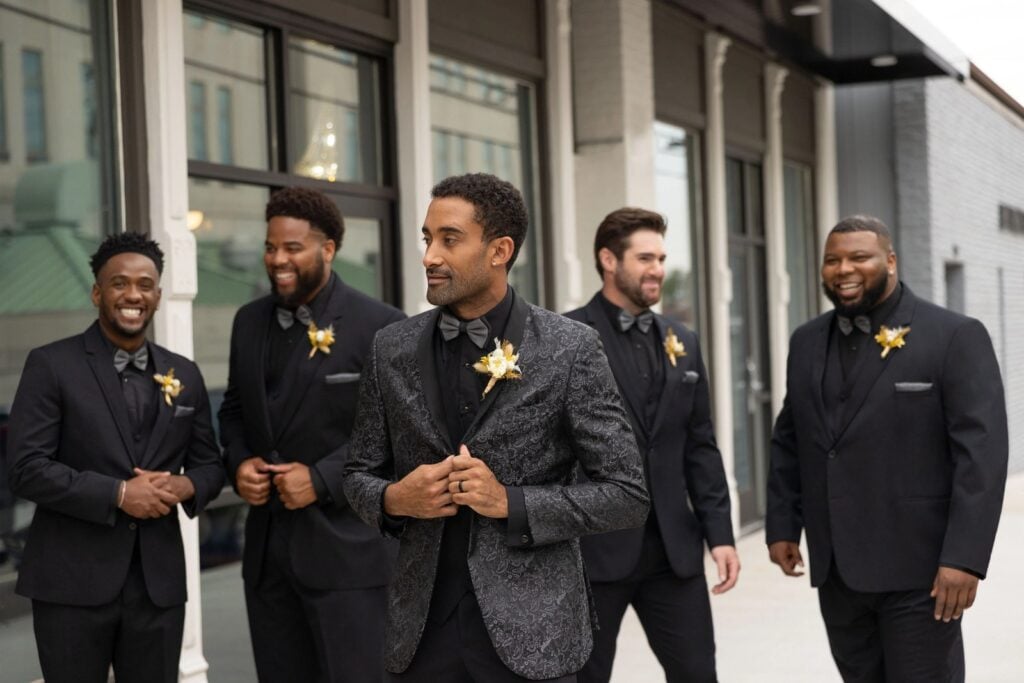
One more thing worth knowing early: the groom typically coordinates with his groomsmen rather than matching them exactly. A slightly different accessory or detail sets him apart while keeping the whole party visually unified. We’ll come back to that later.
Choosing the Right Tuxedo Lapel and Color
Once the basics are settled, the lapel is where personality enters the picture. It’s worth understanding before you’re standing in front of a mirror trying to decide on the spot.
Peak Lapel vs Shawl Lapel
A peak lapel has sharp, upward-pointing edges that give the jacket a confident, structured line. It’s the most traditional choice, and it photographs beautifully under formal lighting.
A shawl lapel curves smoothly around the front of the jacket with no notch interrupting it. That gives a softer, more streamlined look that some grooms find reads as more modern.
Neither is more correct than the other for black tie. The decision comes down to which silhouette actually suits the person wearing it. What won’t work is a notch lapel, the kind found on everyday business suits. It simply isn’t built for strict black tie and will stand out for the wrong reason.
Black or Midnight Blue
Classic black remains the safest, most universally correct choice. Midnight blue is a legitimate alternative though, and for a good reason: under evening and indoor lighting, true black can actually read flatter than a deep midnight blue, which picks up a richer tone.
The catch is that color isn’t a shortcut around the construction. A midnight blue tux still needs the satin or grosgrain lapel facing and the full formal build. It’s not simply a navy suit standing in for the real thing.
A couple of other variations are worth knowing about depending on the wedding itself. A velvet jacket brings extra richness and texture to a winter black tie event while staying fully within the dress code. A white dinner jacket, paired with black formal trousers, is the classic choice for a warm-weather or outdoor black tie wedding, and it’s been correct for formal summer evenings for decades.
Completing the Look: Shirt, Bow Tie, and Accessories
The jacket gets most of the attention, but the details underneath are what separate a genuinely polished look from one that’s just close enough.
Tuxedo Shirt Styles
A tuxedo shirt isn’t a dress shirt with a different label. It typically has a pleated or piqué bib front, and either a wing collar or a turndown collar, each shifting the formality slightly.
A wing collar is the more traditional, more formal option and pairs especially well with a bow tie that sits flush against it. A turndown collar is slightly more relaxed and versatile, and works well if the overall look leans a touch more modern.
French cuffs with cufflinks are standard here. Button cuffs don’t belong on formal tuxedo shirts.
Finishing Touches: Bow Tie, Waist Covering, and Shoes
A pre-tied bow tie gets you a clean, perfectly even knot every time, no fumbling with lengths or re-tying it twice before photos. We carry pre-tied options for both rental and purchase, so there’s nothing to practice or look up beforehand. One less thing to think about on a day that already has enough moving pieces.
A long necktie, no matter how nice, simply doesn’t belong with black tie. That’s one rule with zero exceptions.
Underneath the jacket, a cummerbund or a low-cut vest covers the waistband where the jacket opens. A cummerbund leans classic. A vest gives a bit more structure if the jacket comes off later in the night.
Round it out with black patent leather shoes, and keep metal tones consistent across cufflinks and any watch or tie accessories, mixing gold and silver in the same look reads as unfinished. Once the photos come back, mismatched accessories are the detail everyone notices first, so cohesion matters more than people expect. Browsing our tux selection is a good way to see how these pieces actually look paired together before committing to any one combination.
Buying vs Renting a Tux for a Black Tie Wedding
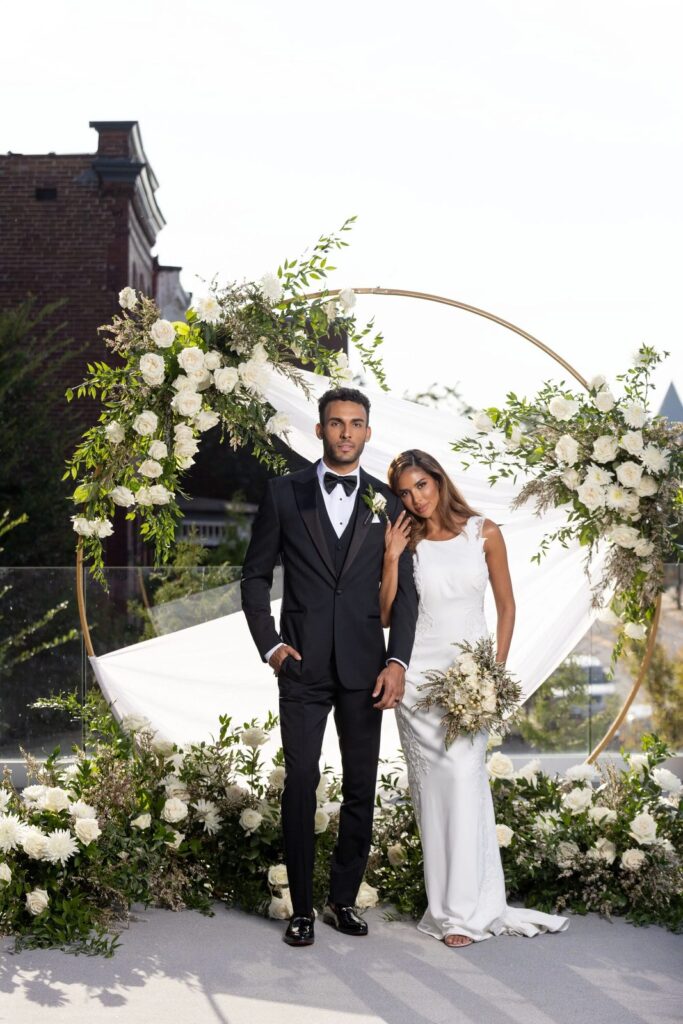
Buying or renting a tux for a black tie wedding isn’t really about which option costs less upfront. It’s about how often formal events show up in your life, how exact a fit you want, and how much you want to deal with afterward.
What Most Grooms Choose
Most grooms and wedding parties rent, and it’s easy to see why. Everything ships straight to your door, fits are handled ahead of time, and when the night’s over, it goes right back; no dry cleaning, no storage, nothing to think about after the photos are taken.
Buying is the better fit for grooms who expect more formal events ahead, galas, other weddings, work functions, since owning means it’s cut and finished around your exact measurements and it’s yours for good. Plenty of couples mix the two: the groom buys, the party rents, or the other way around. We’ll help you figure out what makes sense for your group.
Getting the Fit Right
Fit is genuinely where the visible quality gap shows up. Shoulder seams, sleeve length, and trouser break make or break the final look far more than the price tag does.
A good styling appointment doesn’t start with pulling jackets off a rack. It starts with questions: what’s the venue, what’s the couple’s vision, what’s the color palette for the day. Those answers shape everything that follows, and they’re exactly what a stylist walks through with you rather than leaving you to guess alone.
That’s the exact gap our in-person styling appointments are built to close. You don’t need to research your size or style before you walk in. We work through it together.
Coordinating the Groom and Wedding Party
Outfitting one groom is a simple decision. Outfitting an entire wedding party is a logistics project, and it deserves to be treated like one.
Timeline for Ordering and Alterations
More people means more variables: different builds, different schedules, and more coordination between everyone involved.
The honest rule here is simply earlier is easier. Starting well ahead of the wedding date avoids the stress of chasing down a groomsman’s measurements the week before, or discovering an alteration needs more time than anyone expected.
There’s no need to overthink an exact countdown. Just don’t leave it until it’s the only thing left on the to-do list.
Avoiding Common Tux Mistakes
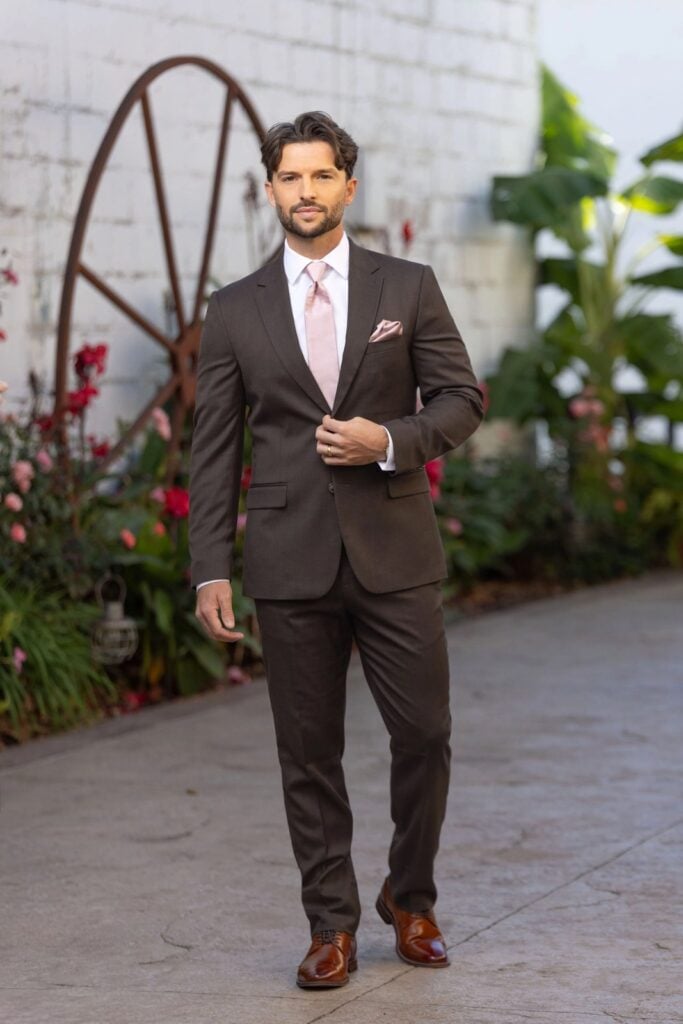
A few mistakes show up in wedding photos more than any others: a notch lapel at a strictly formal event, brown shoes or a belt paired with black formalwear, an exposed waistband where a cummerbund or vest should be, and a necktie standing in for a bow tie.
None of these require expert-level knowledge to avoid. Just a quick mental check before the appointment: lapel correct, waist covered, bow tie only, shoes black. Run through that, and the rest falls into place.
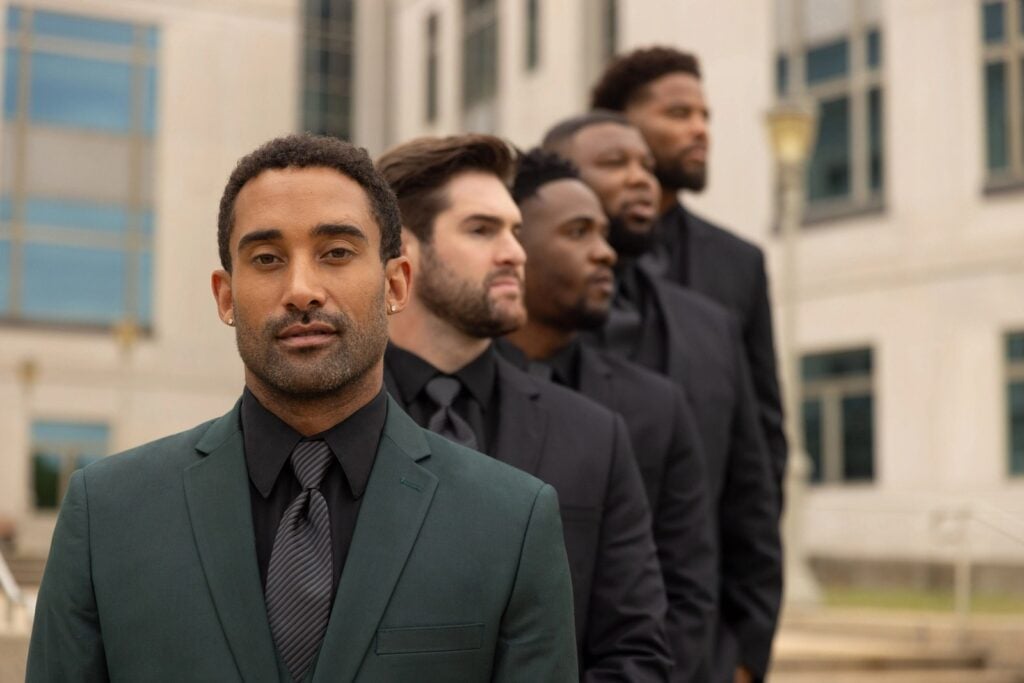
One easy, effective way for the groom to stand apart from his groomsmen without breaking the group’s cohesion is through a single detail rather than a different lapel: an ivory bow tie against the groomsmen’s black, a more elaborate pocket square fold, or a boutonniere that’s visibly distinct from the rest of the party.
Frequently Asked Questions About Buying a Tux for a Black Tie Wedding
Can you wear a suit instead of a tuxedo to a black tie wedding?
No. A suit, however dark or well tailored, doesn’t have the satin or grosgrain lapel facing or formal trouser stripe that black tie calls for.
Can you wear a regular necktie instead of a bow tie?
No. A bow tie is a defining element of black tie, and a long necktie reads as too casual regardless of the fabric or color.
Is midnight blue acceptable for black tie?
Yes, as long as it’s a genuine tuxedo with the correct lapel facing and formal construction, not simply a dark navy suit.
Should I buy or rent my tux?
Buying tends to make more sense for grooms and for anyone likely to attend formal events again. Renting is a practical choice for groomsmen outfitting for a single occasion.
Find Your Perfect Tux at Our Southport, Indianapolis Location
Our Southport, Indianapolis location is built for exactly this kind of appointment: personal, unrushed, and genuinely collaborative.
You don’t need to walk in with lapel preferences or measurements already decided. Our stylists work through every choice with you, from silhouette to fit to final styling, and remote participation is available for anyone in the group who can’t make it in person.
Finding the right tux for black tie wedding season shouldn’t feel complicated. Make an appointment with Sophia’s Bridal and Tux, and let’s get you ready for the big day.


0 Comments