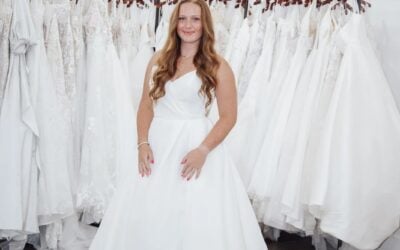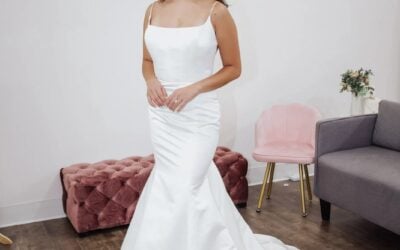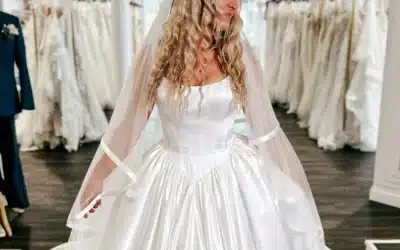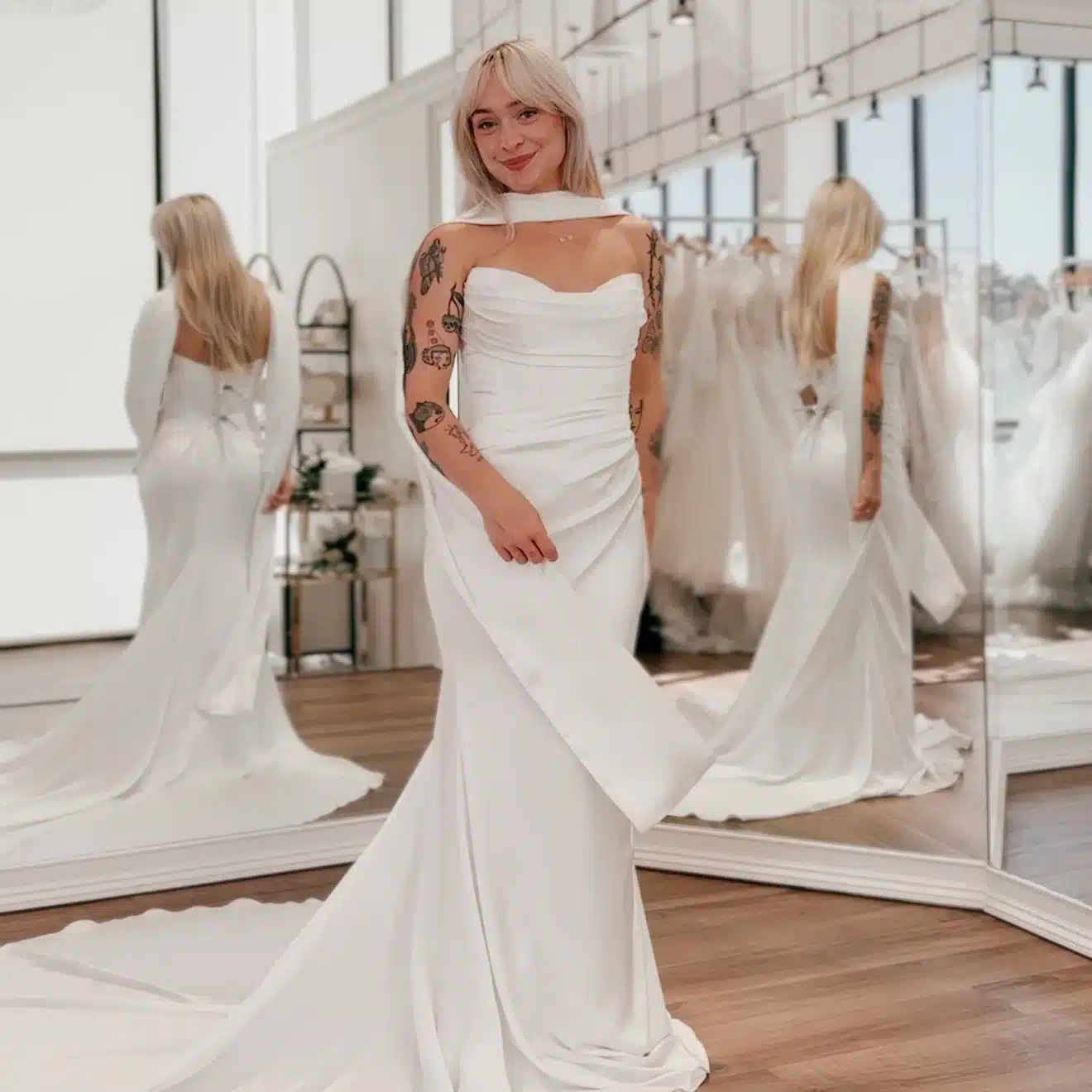
Most brides don’t regret the dress. They regret the veil that felt wrong, the earrings that fought the neckline, or the shoes nobody could even see under the hem. Styling a wedding dress is the part of the process that actually determines whether you look like a bride from a magazine spread or a bride who looks like herself, and it deserves just as much attention as picking the gown itself.
At Sophia’s Bridal and Tux, this is the conversation we have with nearly every bride who walks through our doors, because a gown is only half of the equation. The other half is everything you build around it. This guide walks through the real decisions that go into styling wedding dresses, from finding your style identity to picking the right veil, jewelry, and layering pieces, so you can put together a look that’s unmistakably yours.
If you’d rather skip the research and try it all on in person, we’d love to help you find it.
What Does Styling a Wedding Dress Really Mean?
Styling covers everything around the gown that shapes your final look. That includes the veil or headpiece, jewelry, shoes, any layering pieces like a jacket or cape, and how your hair works with all of it together. The dress is the foundation, not the whole outfit.
Most of the “I don’t look like myself” photos brides dread come from getting that balance wrong, not from choosing the wrong gown. Over-accessorizing buries a beautiful dress under too many competing details. Under-personalizing, on the other hand, can leave a bride feeling like she’s wearing a costume instead of her own wedding day look.
Good styling for a wedding dress starts with knowing your personal style before you ever touch a veil or a pair of earrings, which is exactly what the next section walks through. A stylist’s real job during a fitting is translating your personality into concrete choices: this fabric, this neckline, this accessory, not that one. That’s the part that’s genuinely hard to do alone from a screen, and it’s where an in-person appointment earns its keep.
Finding Your Bridal Style Identity
Starting with who you are, rather than what’s trending this season, narrows thousands of options down to a handful fast. It also gives you and your stylist a shared language to work from once you’re actually trying on gowns.
You don’t have to fit neatly into one category, either. Plenty of brides blend two identities, like a romantic bride who wants a modern minimalist’s clean jewelry, and that’s completely normal. Use the five identities below as a quick self-check before your appointment, or take our bridal style quiz if you want a faster answer.
Romantic and Soft
This identity leans into flowing fabrics, lace, floral detail, and softness in movement. A cathedral veil with delicate 3D floral accents pairs beautifully here.
Soft curls or a loose, undone updo keep the whole look cohesive rather than stiff. The goal with a romantic look is movement: nothing should feel too structured or too sharp.
Modern and Minimalist
Clean lines, structured necklines, and matte fabrics like crepe define this look, and minimal absolutely does not mean boring. This is actually where accessories carry the most weight, since a single bold statement earring or a striking cuff bracelet becomes the hero detail that makes the whole outfit feel intentional rather than plain.
The trick with a minimalist look is restraint. Pick one standout piece and let everything else stay quiet around it.
Bohemian and Free-Spirited
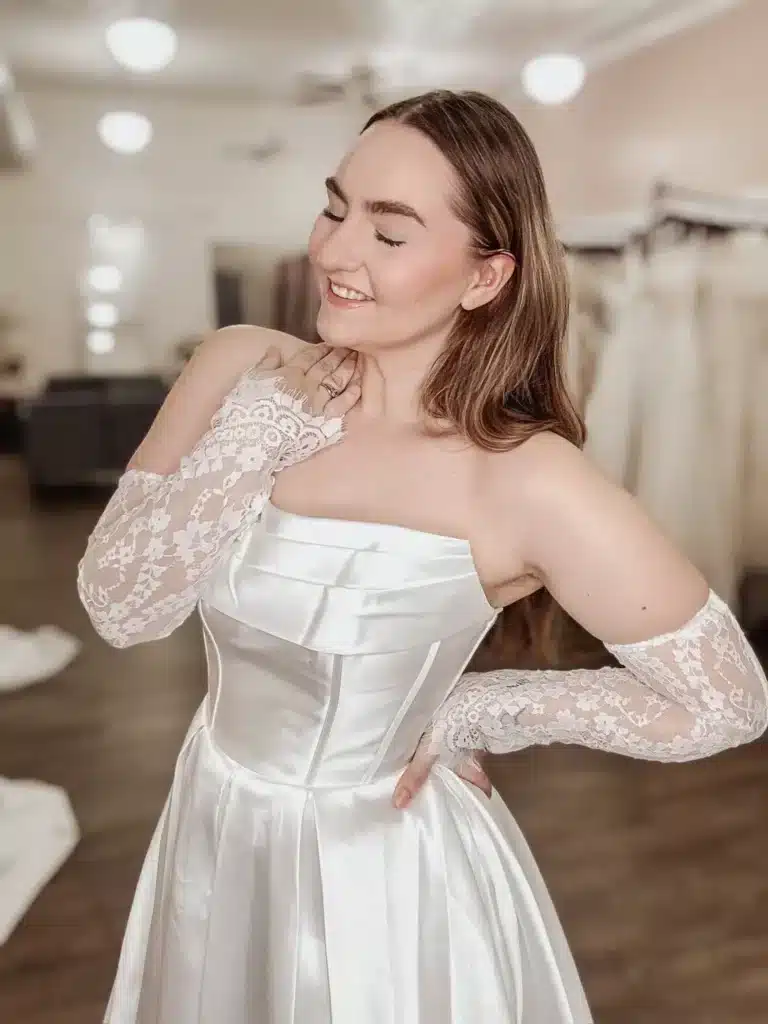
Relaxed silhouettes, illusion sleeves, and natural texture are the building blocks here. Flower crowns, loose waves, and layered delicate necklaces are signature moves for this identity.
This is also the group most likely to skip a traditional veil entirely in favor of a headpiece alternative, which we’ll get to shortly. Bohemian styling tends to favor texture over shine: raw silk, natural fibers, and hand-tied details all read as authentic rather than overly polished.
Classic and Timeless
Ball gown or A-line silhouettes with simple, elegant lines define the classic bride. Pearl jewelry and a cathedral or fingertip veil are natural pairings for this identity.
This look tends to age the best in photographs, which matters if you’re worried about a trendy choice looking dated a decade from now. Classic styling rewards simplicity: fewer, better pieces instead of a lot of small details competing for attention.
Glamorous and Bold
Beading, crystal detail, and dramatic trains belong to this identity, balanced out by statement jewelry and sleeker hair so the whole look doesn’t compete with itself. The biggest mistake glam brides make is stacking too many focal points at once.
Pick one moment to shine, whether that’s the beading on the gown or a dramatic pair of earrings, and let the rest of the look support it instead of competing with it.
How to Style Your Wedding Dress With Veils and Headpieces
The veil is usually the second-biggest styling decision after the gown itself, and it should follow directly from the style identity you just identified rather than get picked in isolation. Getting the length and formality right changes how the entire silhouette reads, both from the front and as you walk down the aisle.
Veil Lengths Explained
A birdcage veil is short and face-covering, with a distinctly vintage feel. A blusher is a separate short layer worn over the face during the ceremony, then flipped back once the vows are done.
Suggested: 90s Wedding Dress Styles for the Modern Bride
Fingertip veils, which fall to the fingertips, are the most versatile and commonly chosen length. Chapel veils extend past the fingertips for a more formal look, and cathedral veils go several feet beyond that for maximum drama at a formal or black-tie wedding.
Veil length should scale with your train length and your venue’s size, not be chosen on its own. A cathedral veil in a small, intimate space can overwhelm the room, just as a birdcage veil can feel out of place in a grand cathedral.
Headpiece Alternatives to a Veil
Flower crowns, jeweled combs or pins, and structured headbands are all increasingly common choices, especially for modern and bohemian brides. Going bare-headed is just as valid an option now as wearing a veil, and neither one is a lesser choice. They’re simply different ones.
Trying options on in person, under real lighting, is genuinely the fastest way to see what actually works with your face shape and your gown’s neckline. That’s part of why so many brides save this decision for their fitting rather than guessing from a screen.
Accessorizing Your Wedding Dress: Jewelry, Belts, and Shoes
The core rule for accessorizing a wedding dress is matching your metal tone and stone style to how embellished the gown already is, rather than picking jewelry purely on personal taste in isolation. A heavily beaded gown wants jewelry that complements that sparkle, not competes with it for attention.
Matching Jewelry to Your Neckline
Strapless and off-shoulder necklines can carry bigger statement earrings and necklaces without looking overdone. High necklines, on the other hand, usually call for simpler pieces so the jewelry doesn’t fight the dress for attention.
This is exactly the kind of detail a stylist walks you through in a fitting room, since it’s much easier to see against your actual gown than to picture in advance. Our accessories shop carries pieces suited to a range of necklines if you want to browse before your appointment.
Belts and Sashes for a Personal Touch
A belt or sash is the lowest cost, highest impact way to personalize a simpler gown. Adding color, texture, or embroidered detail at the waist can shift a dress’s entire personality without altering the silhouette at all.
This is often the easiest change to make later too, if your style evolves between your first fitting and your wedding day.
Choosing Shoes That Fit Your Day
Comfort can safely win over drama here, since shoes are almost always invisible under a hem for most of the day. Plenty of brides wear a dressier heel for photos, then switch to a comfortable flat or even a sneaker once the reception gets going, and nobody notices the swap but you.
If your venue includes grass, gravel, or cobblestone, comfort matters even more. Heel stoppers and a backup pair are worth planning for ahead of time.
Layering Pieces for Two Looks in One Dress
Layering pieces are one of the most underused tools in wedding dress styling, letting you change your gown’s mood without changing the gown itself. They’re also genuinely practical for weather and venue requirements, which the next section covers in more detail.
Detachable Sleeves
Detachable sleeves let you wear long sleeves for a ceremony, which is especially useful at religious venues that require covered shoulders, then remove them before the reception starts. This has become a genuinely popular trend for a good reason: it solves a real problem instead of just adding decoration.
Jackets and Capes
A jacket or cape serves two purposes at once: dramatic effect in photos and practical warmth for a cooler season wedding. A cropped bolero reads very differently than a full length cape, so the choice should tie back to your style identity.
A glam bride and a bohemian bride will reach for two very different toppers, and that’s exactly the point of having this option available.
Overskirts
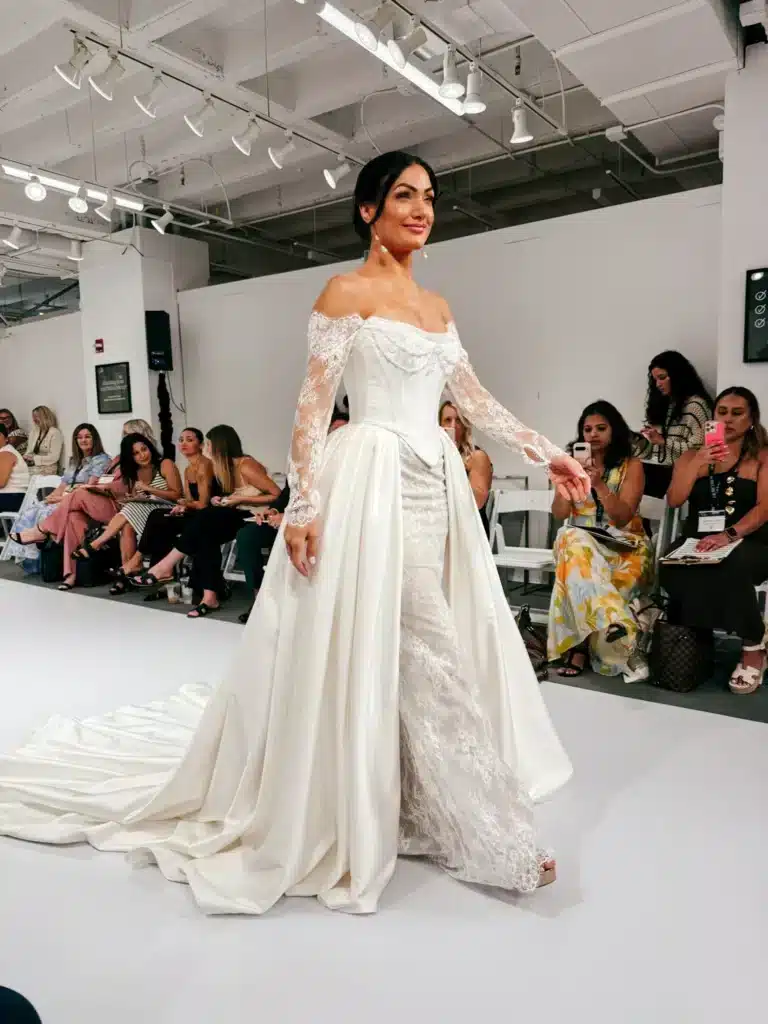
An overskirt is a dramatic skirt worn over a simpler sheath or fitted gown, often removed before the reception begins. It’s a lesser known trick that gives you a dramatic ceremony moment and a comfortable, dance ready look for the rest of the night, all from a single dress.
Styling Tips for Your Venue and Season
Outdoor or garden weddings call for lighter fabrics and shorter veils, since wind is a real factor. Flower crowns tend to handle that movement gracefully, where a longer veil might not.
Religious or church venues often require covered shoulders, which is exactly where detachable sleeves and jackets earn their place. Black-tie or ballroom settings can support more drama, including cathedral veils and statement jewelry, since the formality of the room calls for it.
Knowing your venue and season in advance makes every styling decision easier, and it’s part of what a personalized fitting helps sort through before you commit to anything.
Book Your Styling Appointment at Sophia’s Bridal and Tux
Styling is best discovered in person, trying real fabrics, veils, and accessories under real light, not guessed at from a screen. Our wide range of sizes and styles at Sophia’s Bridal and Tux means you can explore more than one identity in a single visit instead of being boxed into just one look.
Brides at all of our locations in Indianapolis get one-on-one time with a stylist who builds the whole look around them, not the other way around. Make an appointment with Sophia’s Bridal and Tux, and let’s find the version of this dress that feels entirely like you.