A corset wedding dress is one of the most requested styles in bridal fashion today, and for good reason. At Sophia’s Bridal and Tux, we see brides fall for this silhouette in nearly every appointment. The structured, boned bodice sculpts your silhouette, supports your frame, and creates a stunning hourglass shape without any extra undergarments.
This guide walks you through everything you need to know to find the corset gown that’s truly right for you, whether you’re picturing a dramatic ballgown or a sleek modern sheath.
Key Takeaways
- A corset wedding dress uses a structured, boned bodice with a lace-up or hook-and-eye back to shape and support the torso, working as both a foundation garment and a design statement.
- The adjustable lacing makes corset gowns more forgiving than zipper-back styles, reducing alteration stress and accommodating minor fit changes between ordering and your wedding day.
- Corset bodices flatter every body type. The key is matching the right silhouette (ballgown, A-line, fit and flare, or sheath) to your frame and aesthetic.
- Fabric choice matters: satin and mikado provide structure, lace adds romance, and chiffon creates a softer boho effect, each changing the overall look and feel of the gown.
- The best way to find your corset wedding dress is to try multiple silhouettes in person with a stylist who can guide you. What doesn’t appeal on a hanger often becomes the one once it’s on.
What Is a Corset Wedding Dress?
A corset wedding dress is defined by its structured, boned bodice: a fitted upper section built with internal boning (vertical strips of steel or plastic sewn into the fabric) that shapes and supports the torso. The back typically features a lace-up closure, hook-and-eye closure, or both, so the gown can be tightened or loosened for a custom fit. Unlike a standard dress with a zipper back, the corset works as both a structural foundation and a design feature in its own right.
It helps to know the difference between two related styles. A corset-bodice wedding dress has a fully boned and structured bodice, front and back, like a traditional corset. A corset-back wedding dress has a more standard front construction, but the back features lace-up ribbon or ties. Both are popular, but they offer different levels of shaping and visual impact.
Corsetry in bridal fashion traces back to the Victorian era, when structured undergarments were worn beneath gowns to create the hourglass figure fashionable at the time. Over the decades, corsetry moved from hidden foundation garment to celebrated design element in its own right, and by the early 2000s, corset bodices had become a bridal runway staple. Today, corset detailing is requested by brides across every aesthetic, from classic to boho to maximalist glam.
Part of why it’s stuck around? It delivers real results. The structure is built in, the fit has some give, and the look is timelessly romantic.
The Benefits of Choosing a Corset-Style Wedding Dress
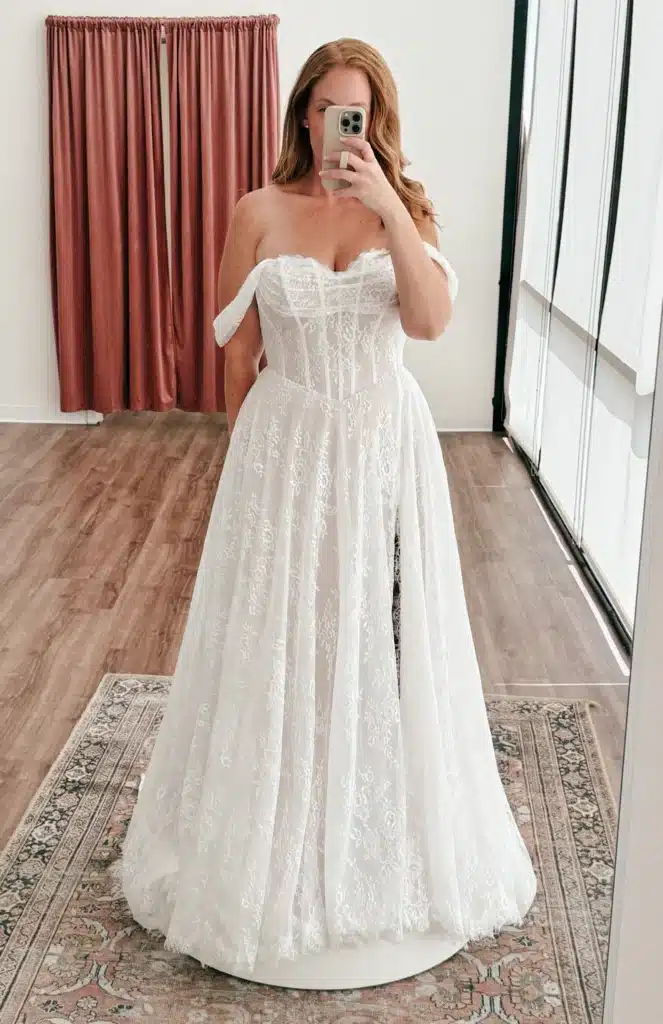
The biggest draw of a corset-style wedding dress is simple: it does a lot of heavy lifting so you don’t have to. The structured bodice sculpts your silhouette, defines your waist, and provides real support, all without a separate foundation garment or strapless bra underneath. That’s a meaningful practical advantage, especially if you’re wearing a strapless or sweetheart neckline.
Here’s what makes corset construction stand out from other gowns:
- Adjustable fit. The lace-up back allows the gown to be tightened or loosened slightly, so minor weight fluctuations between your order date and your wedding day are far less stressful. A zipper-back gown is fixed; a corset back has some natural give.
- Built-in support. The boning replaces the need for an external bra or shapewear in most cases. You get lift, structure, and definition without extra layers underneath.
- Waist definition. Even on frames where the natural waist isn’t sharply defined, a corset cinches and creates that hourglass shape. It’s one of the most effective silhouette-shaping tools in bridal design.
- Simpler alterations. Because the lacing handles much of the waist adjustment, corset-style gowns often need fewer alterations than traditional ones, meaning less time in the seamstress’s chair.
- Versatility across aesthetics. Corset-style gowns work beautifully across venues: rustic barns, grand ballrooms, garden ceremonies, and bohemian outdoor settings all welcome the style.
That combination of beauty and practicality is exactly why corset gowns keep showing up on every bride’s shortlist.
Corset Wedding Dress Styles: Finding Your Silhouette
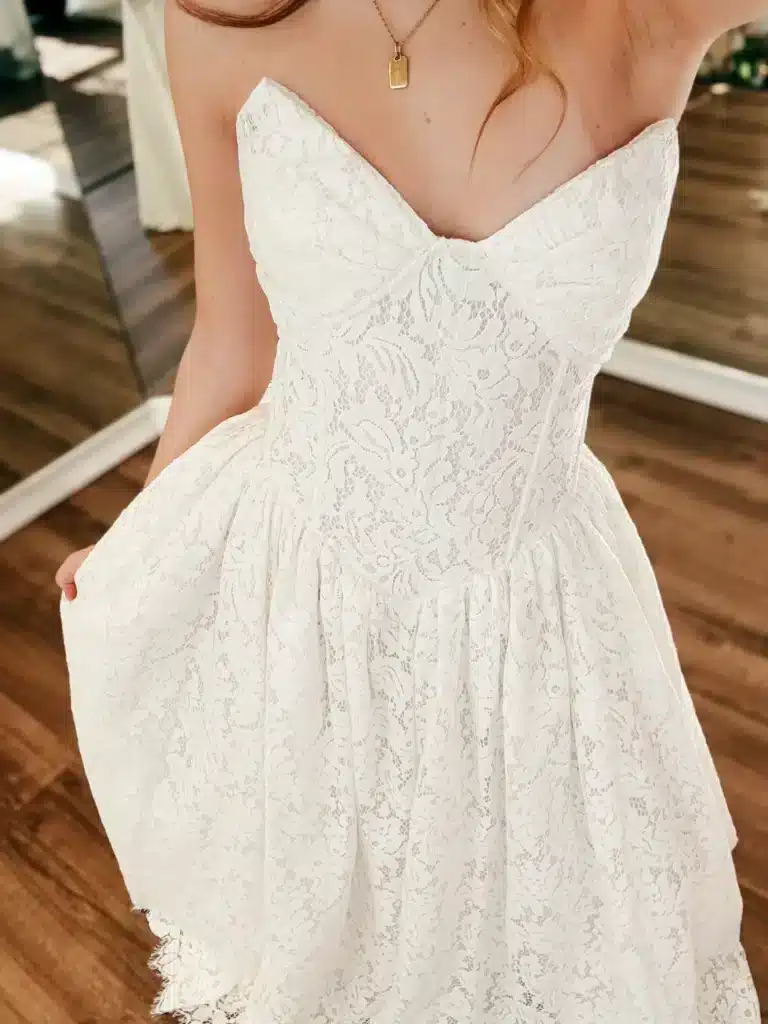
Not all corset wedding gowns look the same. The bodice construction shows up across several distinct silhouettes, and each one creates a completely different mood and fit experience. You can start exploring what’s out there in our bridal gown collection before your appointment, but trying pieces on in person is really the only way to know for sure.
The Ballgown Corset: Drama and Presence
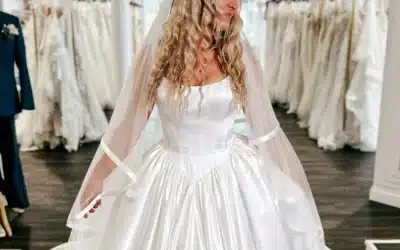
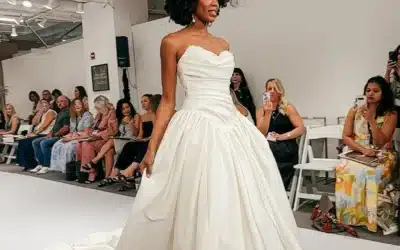
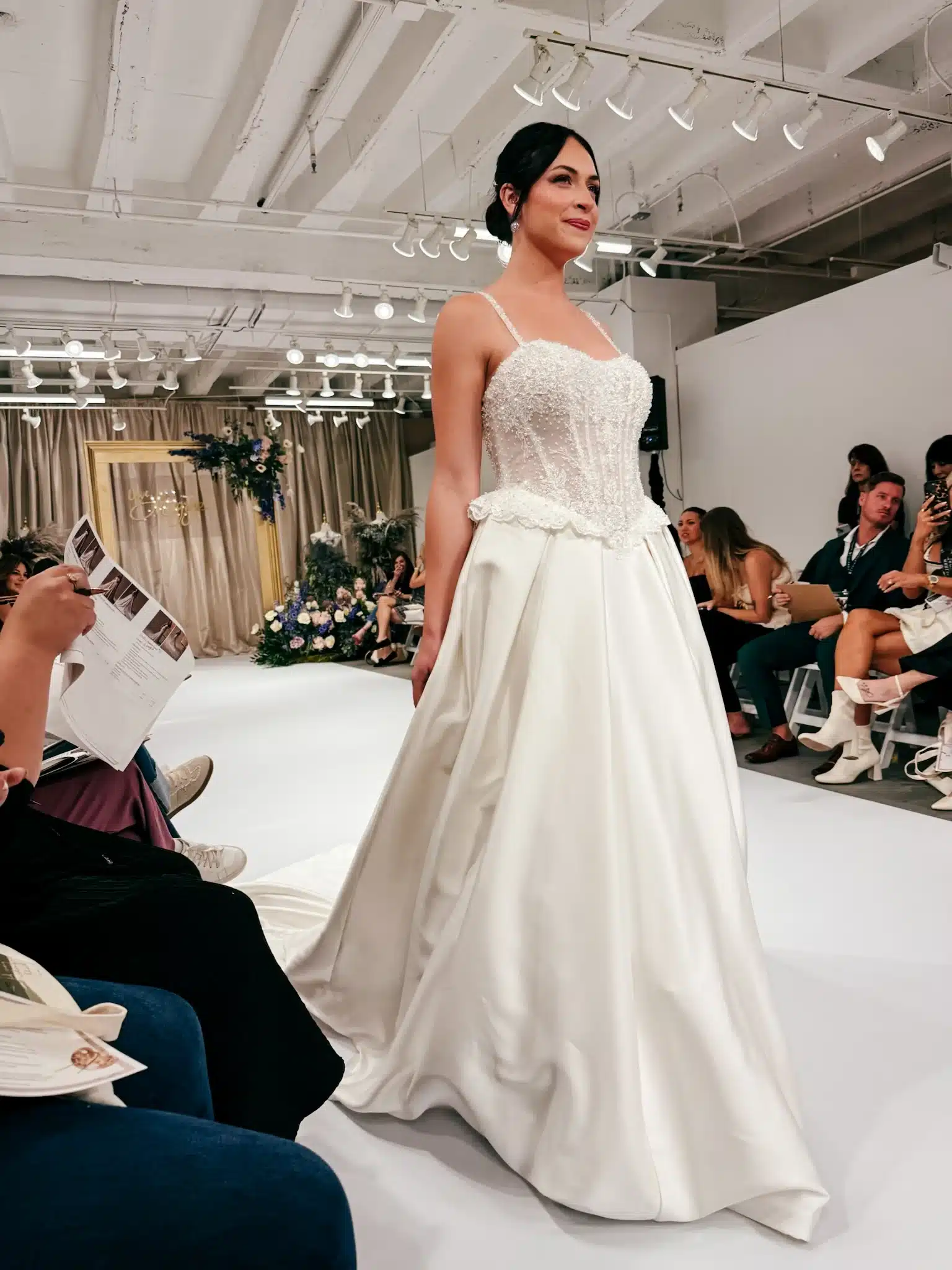
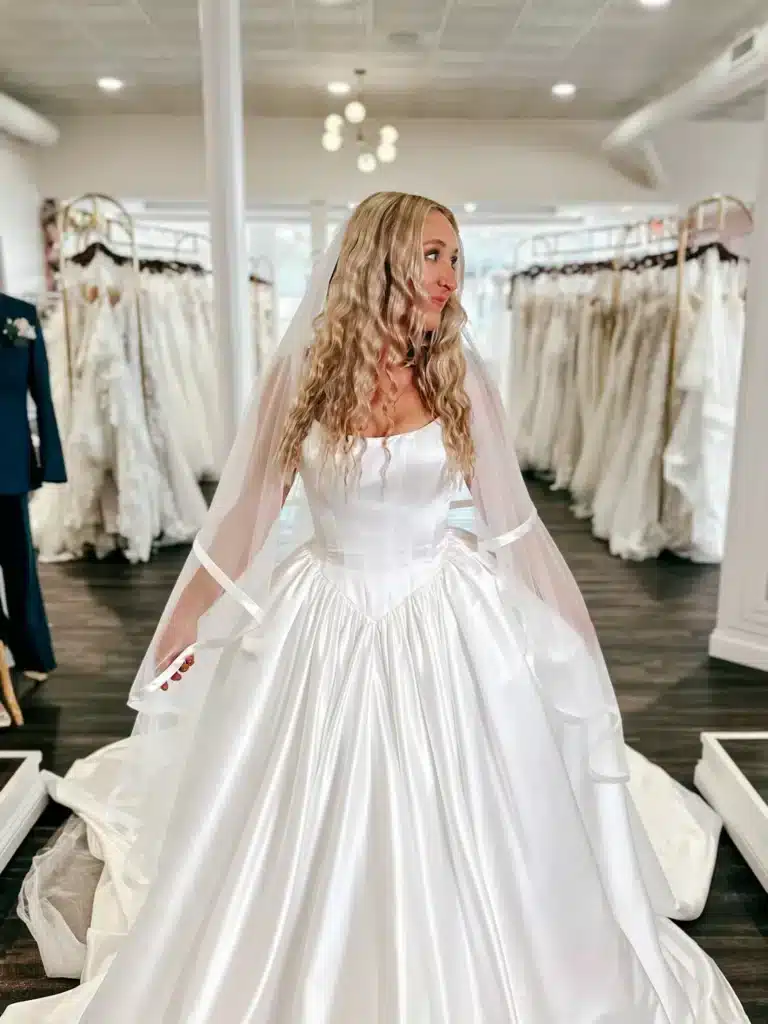
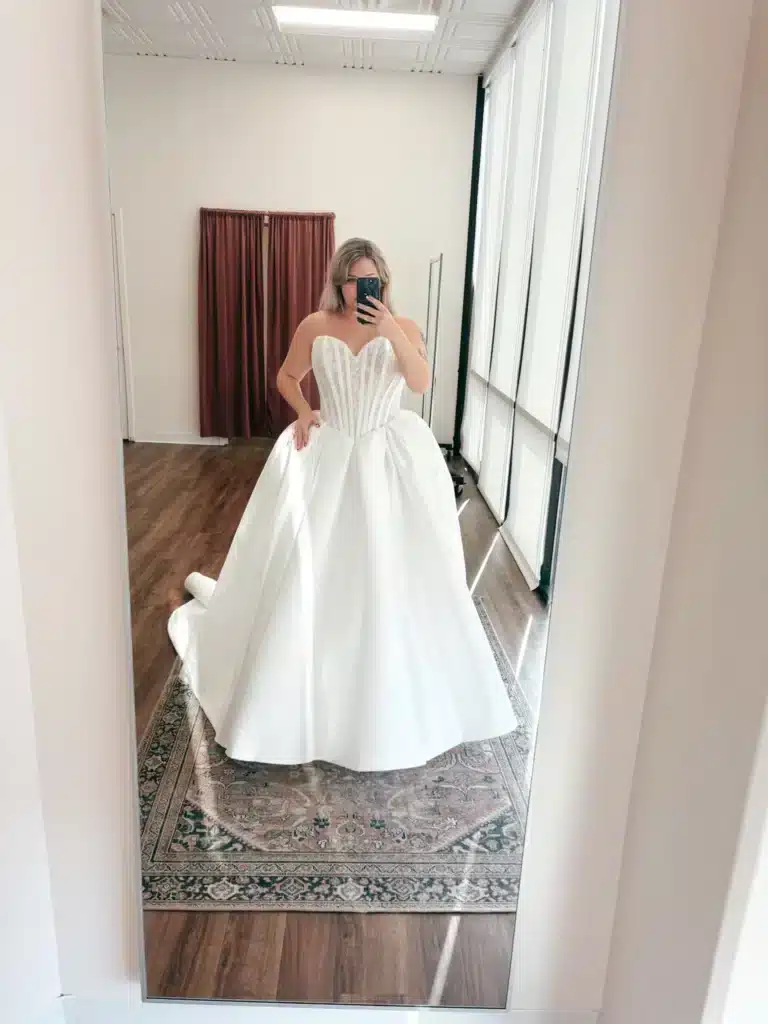
The corset ballgown wedding dress is the most theatrical of the bunch. A fully structured, boned bodice meets a voluminous, floor-sweeping skirt, usually in tulle, organza, or layered fabric, creating a classic princess silhouette. The contrast between the fitted bodice and the dramatic skirt is what makes this style so visually striking.
Corset ballgowns are ideal for grand venues: ballrooms, historic estates, and church ceremonies with long aisles. The style tends to flatter brides who want to emphasize the upper body and waist while letting the skirt skim over the hips and lower body. For petite brides, a high-waisted corset ballgown elongates the torso beautifully.
A-Line, Fit and Flare, and Sheath Corset Styles
A-line corset gowns are fitted through the waist and bodice, then flow outward into a gentle A shape from the hips down. It’s the most universally flattering silhouette, and it suits nearly every body type and wedding aesthetic.
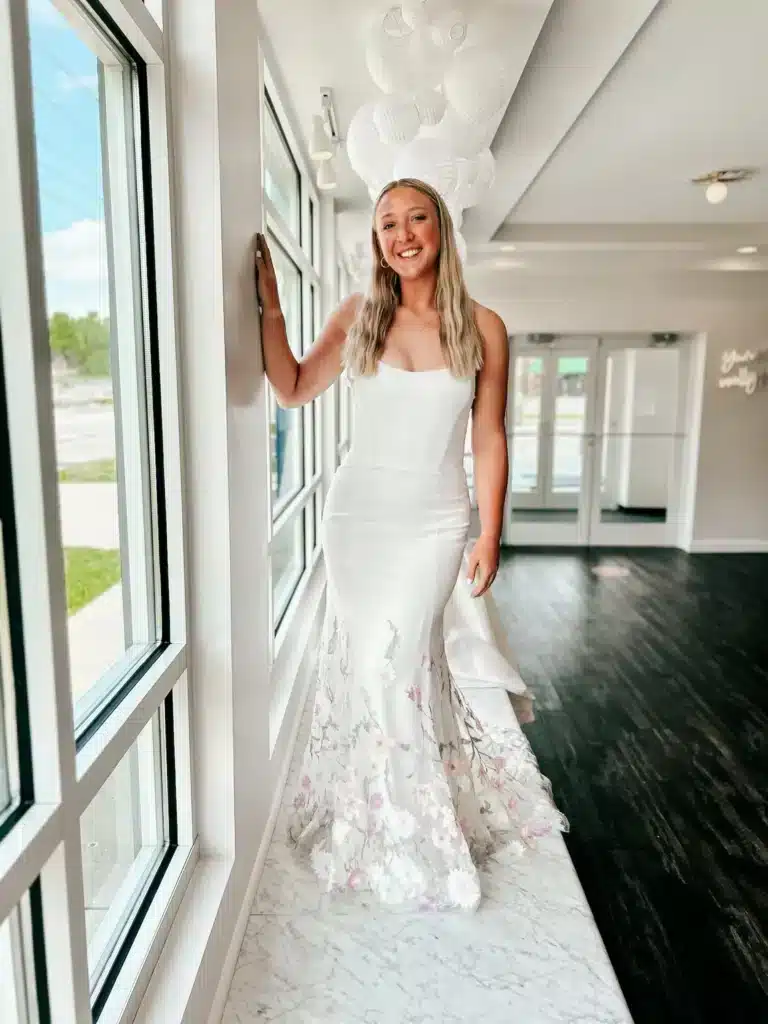
Fit and flare corset gowns hug the body from the structured bodice all the way down to the knee, then flare outward. It’s the most form-fitting option and makes a bold, confident statement, best suited to brides who are comfortable with a close fit through the hips and thighs.
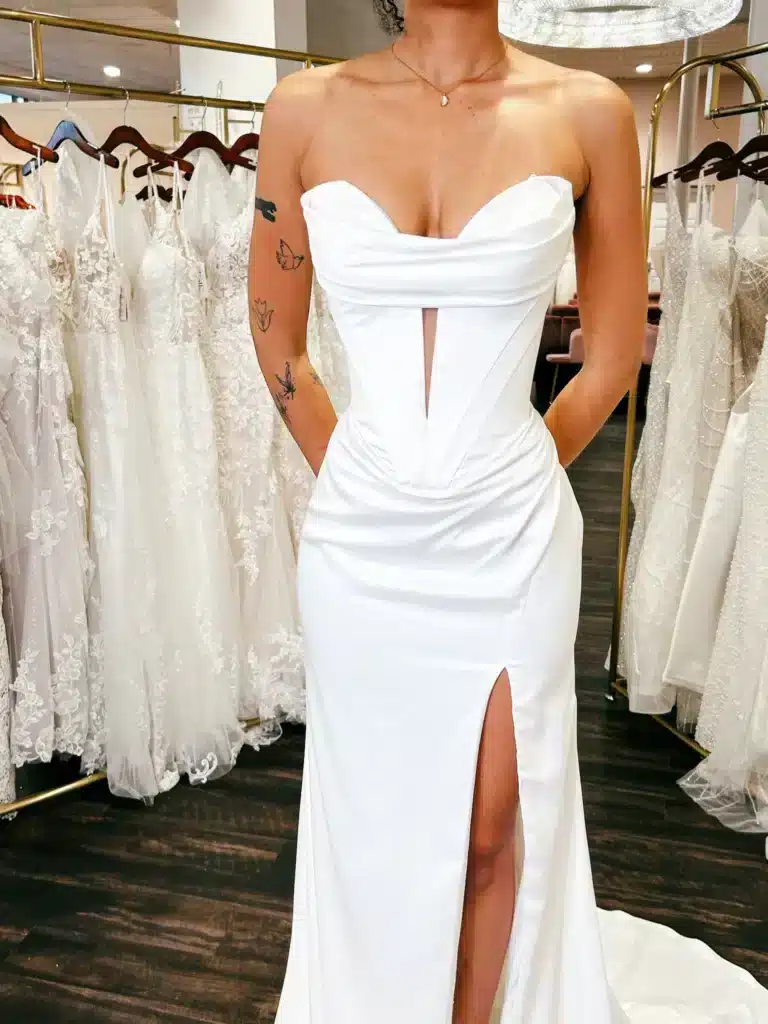
Sheath corset gowns are sleek and modern, with minimal flare and a column-like silhouette. The corset bodice adds structure and waist definition without extra volume, reading as contemporary and minimalist.
Across all of these, lace is a popular overlay for adding texture, romance, and vintage detail, and it works beautifully on any of the silhouettes above. The best way to know which one is right for you is to try more than one. What looks a certain way on a hanger often feels completely different once you’re in it.
Which Corset Style Is Right for You?
The corset bodice is one of the most versatile design elements in bridal, and part of what makes it so popular is how many different looks it can create. Whether you’re drawn to a dress that highlights your waist, one that skims over it, or something in between, there’s a corset construction that can get you there. If you’re not sure where to start, our bridal style quiz is a fun way to narrow things down before your appointment.
- If you love the idea of a defined waist, fit and flare corset gowns follow the body’s natural line, and A-line styles can create a similar effect with a bit more movement in the skirt.
- If you’d rather the focus stay soft and flowing rather than fitted, an A-line or ballgown corset offers structure through the bodice while letting the skirt do its own thing, no clinging required.
- If you’re drawn to a more modest or relaxed silhouette, a corset bodice can still give you shape and support without anything feeling tight or emphasized, especially paired with a fuller A-line or ballgown skirt.
- Some brides love how a corset bodice feels structured and supportive on its own, whether or not it changes how anything looks. That’s a completely valid reason to love one.
- Lace corset gowns in A-line or ballgown silhouettes are a favorite across the board, for brides who want romance and structure together.
There’s no single “right” way to feel beautiful in a corset gown, and no feature you need to highlight or minimize to love your dress. A skilled bridal stylist can walk you through how boning behaves, how necklines affect the overall feel, and which fabrics drape the way you’re picturing, all of which is genuinely hard to judge from photos online. Booking a fitting appointment is the best way to find the version that feels like you.
How Corset Wedding Dresses Fit (and How to Get Yours Right)
Corset wedding dresses fit differently than standard gowns, and understanding the mechanics takes a lot of anxiety out of the process. A corset bodice is typically sized to your fullest measurement, usually the bust or hips, with the back lacing used to adjust through the waist. That means the gown naturally accommodates more variation than a zipper-back dress, which is fixed once it’s sewn.
The boning inside the bodice comes in two main types. Steel boning is firmer and more durable, holding its structure through a long wedding day. Plastic boning is lighter and more flexible, making it a better fit for softer, less structured styles. Higher-end corset gowns typically use steel, or a combination of both, for real support.
A well-fitted corset should feel snug and supportive, not painful and not restrictive. If you can’t take a full breath, or the boning digs into your ribs, something’s off, either the sizing is wrong or the lacing is too tight. A properly laced corset lets you sit, dance, hug people, and eat dinner without discomfort.
Bring your actual wedding-day undergarments to every fitting, and stick to nude tones close to your skin, smooth and low-profile so nothing shows through a form-fitting fabric. This matters especially for corset gowns, since the structured fit leaves very little room for bulky layers underneath.
For custom-made or designer corset gowns, lead times typically run four to six months, with final fittings scheduled six to eight weeks before your wedding day. Alterations on corset gowns are usually lighter than on standard gowns since the lacing handles much of the waist adjustment, but budget for at least one fitting regardless.
Corset Wedding Dress Fabrics: What Works Best?
Fabric choice matters a lot for corset gowns, since the bodice needs enough structure to hold the boning in place while the skirt often calls for something completely different in weight and drape. Here’s a breakdown of the most common options:
- Satin gives a sleek, polished finish that highlights every curve the corset creates. It photographs beautifully and reads as classic and luxurious, best for structured, formal gown styles.
- Lace is the most romantic choice for a corset bodice, layered directly over the boned foundation to add texture, vintage detail, and softness to what’s otherwise a very structured garment. It works across nearly every silhouette.
- Tulle is lightweight and used mainly in the skirts of ballgown styles, creating volume and movement without adding weight, a natural complement to a heavily structured corset bodice.
- Mikado is a firm, matte fabric that holds shape exceptionally well, ideal for sculptural, architectural corset bodices where clean lines and a tailored appearance are the goal.
- Chiffon is softer and more fluid, perfect for boho-inspired corset styles. Because it’s lightweight, chiffon gowns typically need more interior support from the boning to maintain structure.
Fabric also affects how the gown moves, feels throughout the day, and holds up to wear. The right choice depends on your venue, your aesthetic, and how you want to feel: fluid and ethereal, or sharp and dramatic. A stylist can walk you through swatches in person so you can feel the difference firsthand.
Finding Confidence in the Fitting Room
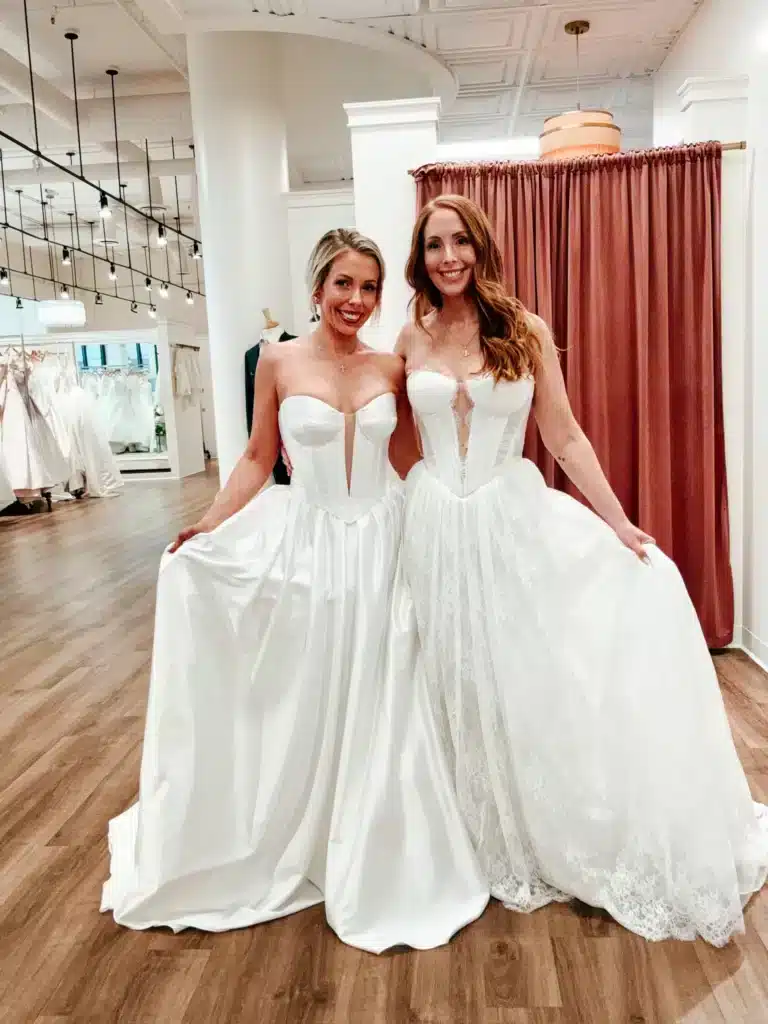
Plenty of brides who fall in love with a corset gown didn’t start out looking for one. The structured bodice can look intimidating on a hanger, and the lacing can look complicated before you’ve actually tried it on. It doesn’t always read as “you” until it’s on your body, and then something shifts.
What makes the difference is the process. In a personalized appointment, the conversation starts with you: your venue, your vision, how you want to feel on your wedding day. A good stylist listens before pulling anything off the rack. And when a bride who came in expecting something floaty and simple steps into a structured corset ballgown almost on a whim, and the mirror shows her something she didn’t expect, that’s usually the moment everything clicks.
The corset silhouette tends to give brides more than just a dress: support they didn’t know they needed, a shape they didn’t know was possible, and a level of confidence that carries all the way through the wedding day.
Corset Wedding Dress Trends to Know
The corset silhouette itself is timeless. It’s been a bridal staple for decades and isn’t going anywhere. But the styling details around it evolve every season, and a few directions are worth knowing about right now:
- 3D floral appliqué on the bodice. Textured, dimensional flowers placed across the corset create a romantic, sculptural effect that photographs beautifully.
- Detachable skirts paired with corset tops. This two-in-one approach gives you a dramatic ceremony look and an easy transition to something more movement-friendly for the reception.
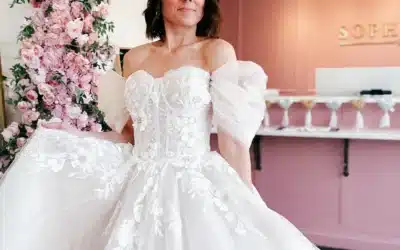
- Sheer and illusion corset panels. Sheer mesh or illusion fabric layered over boning creates a romantic, modern effect. The bodice reads as bold without being revealing.
- Off-the-shoulder and sweetheart necklines. Both remain popular corset neckline shapes, framing the face and collarbone beautifully across body types.
- Colored corset gowns. Blush, ivory, and champagne are showing up more as alternatives to traditional white, adding warmth to the already-rich texture of a corset bodice.
Use trending images for inspiration, not prescription. A corset gown that suits your body, your aesthetic, and your venue will always look more right than one that’s simply popular this season.
Corset Wedding Dress Accessories and Finishing Touches
The right accessories can complete your corset wedding dress look, or compete with it. The key is balance.
- Veils. Cathedral-length veils are a natural match for dramatic corset ballgown styles. For A-line or sheath corset gowns, a blusher, fingertip, or elbow-length veil keeps proportions elegant without overwhelming the look.
- Jewelry. A structured corset neckline often makes a statement on its own. Minimal earrings and no necklace is a classic pairing. If your corset style is simpler in construction, a statement necklace or chandelier earrings add the right amount of sparkle.
- Shoes. Heel height directly affects where your hem needs to fall, so choose your wedding shoes before your final fitting. Switching shoes afterward can mean additional alterations.
- Hair. An updo or low chignon is a natural companion to a corset dress, since it shows off the back, often one of the gown’s most beautiful design details thanks to the lace-up detailing. Don’t cover it with your hair.
- Belt or sash. Some corset styles accept a detachable belt or ribbon sash at the waist to add contrast, shimmer, or color, a great way to personalize a gown or tie in a second color.
One more thing to plan for: bustling. A corset gown with a long train will need to be bustled for the reception so you can move freely and safely on the dance floor. Talk to your stylist and seamstress about the best bustle style for your specific gown well before the big day.
FAQs About Corset Wedding Dresses
What Is a Corset Wedding Dress?
A corset wedding dress features a structured, boned bodice that wraps and cinches the torso, typically with a lace-up or hook-and-eye closure at the back. The corset element can be a full built-in bodice or a corset-style back panel on an otherwise traditional gown. It provides shape, support, and an hourglass silhouette without requiring a separate foundation garment.
How Do Corset Wedding Dresses Fit?
Corset wedding dresses are typically sized to your fullest measurement, usually the bust or hips, with lacing used to adjust the waist. That makes them more forgiving than zipper-back gowns and easier to alter. The dress should feel snug and supportive, not painful or restrictive. Bring your actual wedding-day undergarments to every fitting, and make sure your stylist laces the corset properly so your sizing is accurate.
Can I Wear a Corset Wedding Dress If I’m Plus-Size?
Absolutely. Corset wedding dresses are one of the most flattering options for curvy and plus-size brides, since the structured boning provides support and defines the waist without compressing or flattening curves. A-line and ballgown silhouettes with corset bodices are particularly popular choices. Working with an experienced bridal stylist helps you find a corset style that celebrates your shape exactly as it is.
Are Corset Wedding Dresses Comfortable to Wear All Day?
A properly fitted corset wedding dress should be comfortable for the full duration of your wedding day. The key is correct lacing: tight enough to feel supported and secure, but not so tight that it restricts breathing or movement. If a corset feels painful during a fitting, it’s either laced too tightly or sized incorrectly. Many brides find corset gowns more comfortable than traditional structured bodices, since the lacing can be slightly loosened after the ceremony.
What’s the Difference Between a Corset Back and a Corset-Bodice Wedding Dress?
A corset-back wedding dress features a lace-up closure at the back of an otherwise standard gown, offering some adjustability without a fully boned front bodice. A corset-bodice wedding dress has a fully structured, boned front and back that functions like a traditional corset, offering stronger shaping, more support, and greater visual impact. Both styles are popular, but the full corset bodice delivers more dramatic sculpting of the waist and torso.
Ready to Find Your Corset Wedding Dress?
A corset gown is one of those styles that’s genuinely hard to judge from a photo. The only way to know how it’ll feel, move, and fit is to try it on with someone who can guide you through it. Make an Appointment with one of our stylists and let’s find the corset wedding dress that was made for you.