You found this V-shaped, corseted waistline on Pinterest, or maybe you spotted it on a gown that stopped you mid-scroll. Either way, you’re here because you want a real answer to what is a basque waist, not another vague style roundup. A basque waist is a pointed, structured waistline that dips below your natural waist at center front, and it’s one of the most flattering, most requested silhouettes in bridal right now.
We’re Sophia’s Bridal & Tux, and we carry basque waist gowns across several of our designer collections, so we see firsthand how this silhouette transforms a bride’s shape the moment she steps on the platform. Keep reading, and when you’re ready to feel that for yourself, book an appointment with us.
What Is a Basque Waist?
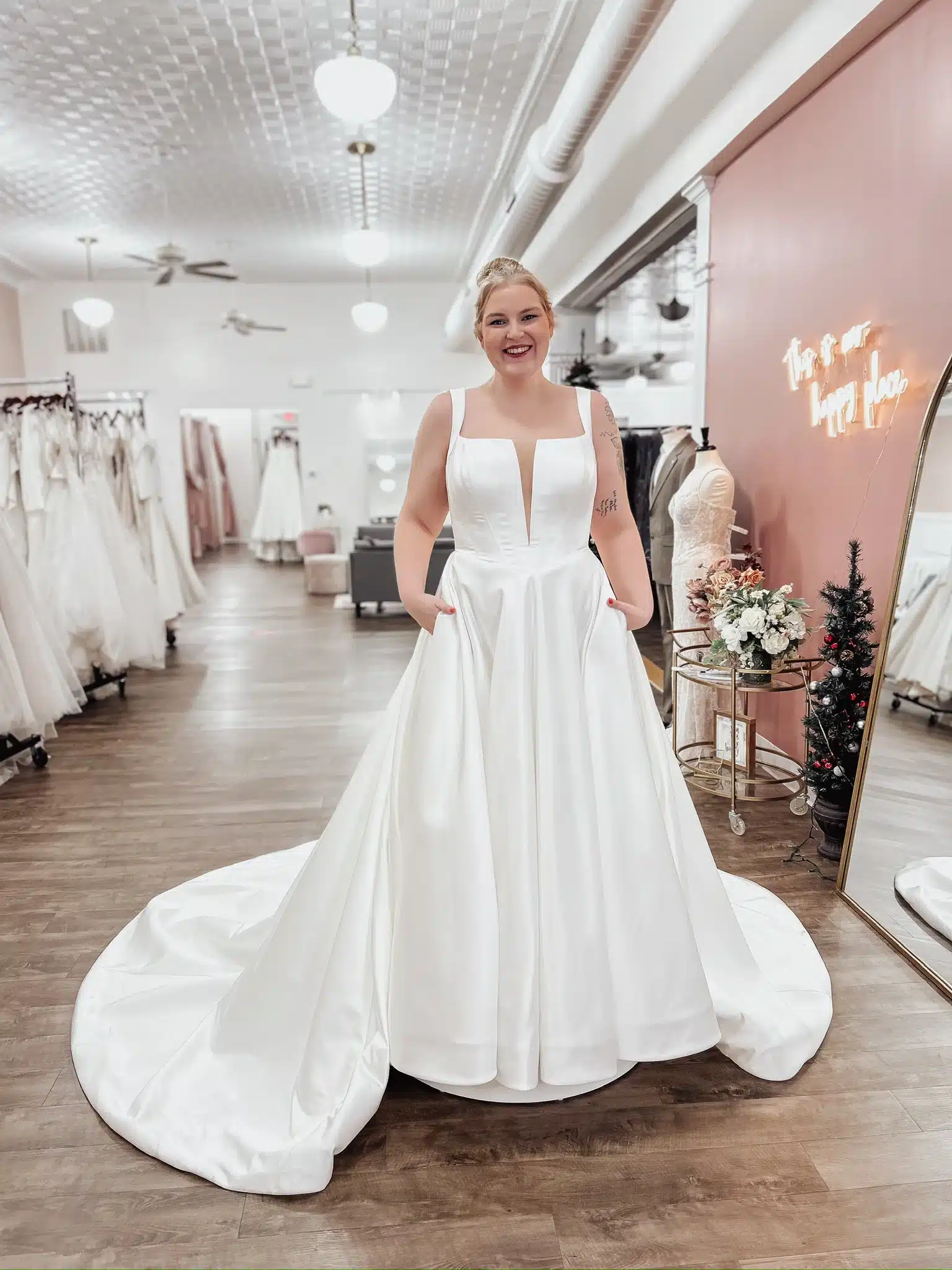
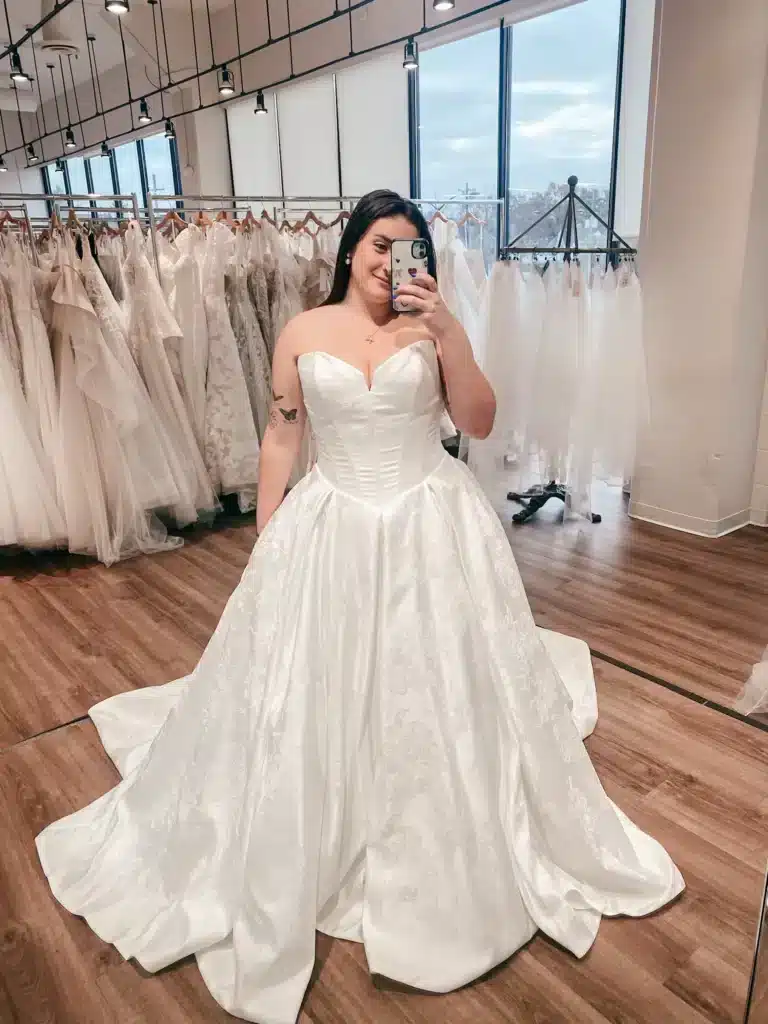
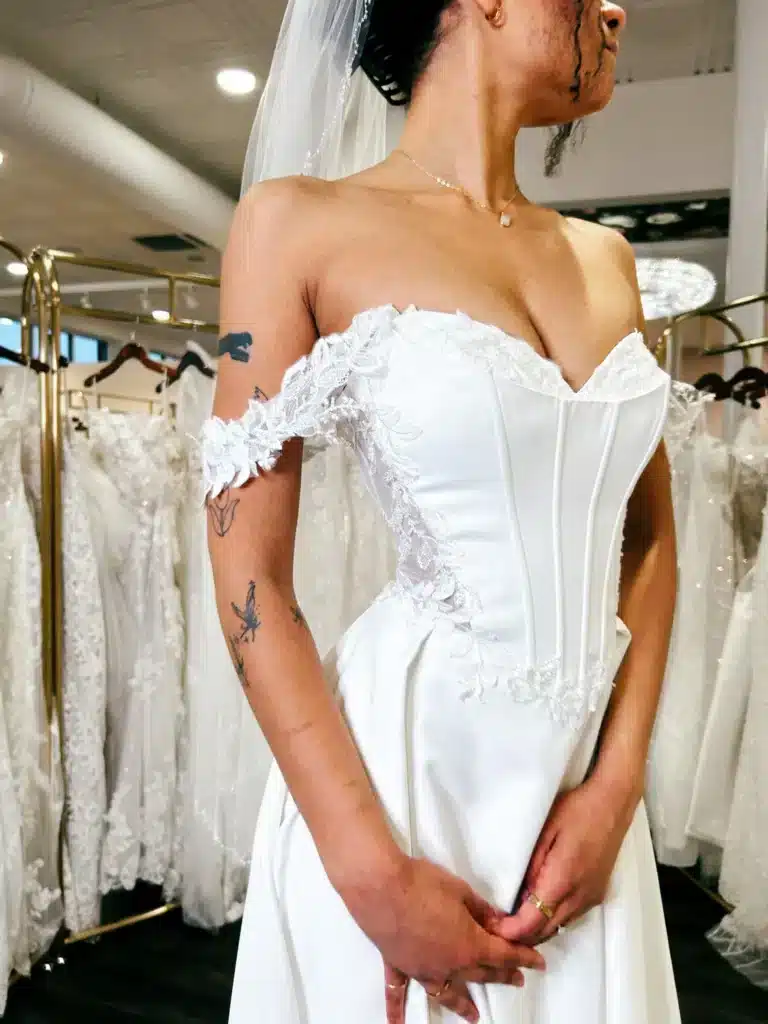
So, what is a basque waist, exactly? It’s a waistline where the bodice extends past your natural waist into a defined point, usually a V shape, sometimes a soft U. That point sits lower at the center front and slightly higher at the sides, which is the detail that gives it a corseted, sculpted look instead of just a lower seam. The bodice itself is almost always boned or structured underneath, and that structure is doing real work: it’s what creates the cinched waist and the smooth line into the skirt.
Here’s where a lot of brides get tripped up while shopping. A basque waist sits lower than a natural waistline but higher than a drop waist, and on the rack, that middle ground can be genuinely hard to spot. You might try on three dresses labeled with three different waistline names and still not see the difference until someone points to the seam and says, “there, that’s the point.” That’s normal. It’s also exactly why trying gowns on with a stylist matters more than scrolling another gallery.
A Little History: Where the Basque Waist Comes From
The name traces back to the Basque region, the area straddling the border of Spain and France, where fitted, pointed bodices were a defining feature of traditional dress. That silhouette caught on with European aristocracy by the 1700s, prized for the way it sculpted the torso without needing volume to do it. By the late 1800s, it had found its way into bridal fashion specifically, right alongside an era that loved drama, romance, and a serious hourglass shape.
Trends move in cycles, and the basque waist has had quieter decades since then. But it never fully disappeared, and it’s back in a big way right now. The broader corset-inspired moment in bridal design, structured bodices, visible boning, sculpted lines, has pulled the basque waist right back to the front of the shop floor. If you’ve noticed more of these gowns on real brides and on designer runways lately, you’re not imagining it.
What Makes the Basque Waist So Distinctive
A handful of design choices work together to create this look. The downward point at center front pulls the eye in and down, which visually elongates your torso. The side seams sit slightly higher than the center point, framing your hips rather than cutting straight across them. And the boning underneath distributes pressure evenly, so you get a cinched, defined waist without the discomfort a single unstructured seam under tension can cause.
This silhouette does its best work with volume behind it. Pair it with a full ball gown skirt and you get sharp, dramatic hourglass contrast, the kind of shape that photographs beautifully from every angle. Pair it with something softer and fuller in a different way, and the drama turns romantic instead of architectural. Either direction works. The point itself doesn’t change; the story it tells around your body does.
Basque Waist vs. Every Other Wedding Dress Waistline
Once you can answer what is a basque waist, the next logical question is how it stacks up against your other options. Here’s the full lineup.
Natural Waist
This sits exactly where your body naturally narrows, usually right at or just above the navel. It’s the most common waistline in bridal because it works with nearly every silhouette, from A-line to sheath to ball gown. If you’re not sure what you want yet, this is the easiest, most forgiving place to start trying things on.
Drop Waist
A drop waist sits at your hip instead of your natural waist, and it uses a straight seam rather than a defined point. It creates a longer bodice and a more relaxed, flowing line through the body. Where a basque waist draws the eye upward and in, a drop waist shifts the visual weight down toward the hips, which reads as looser and more elongated in a different way.
Empire Waist
This is the highest waistline of the group, sitting just under the bust and flowing loosely from there with minimal shaping through the midsection. It’s soft, airy, and a favorite for bohemian, garden, and destination weddings where movement matters more than structure.
Basque Waist
And back to where we started. Structured, pointed, and dipping below the natural waist, the basque waist is the most defined and dramatic option on this list. It’s the one that reads as intentional and sculpted the second you see it, which is exactly why it’s having such a moment right now.
None of these four is the “correct” choice. It comes down to how you want to feel walking down the aisle: architectural and defined, or soft and easy.
Who Does the Basque Waist Flatter?
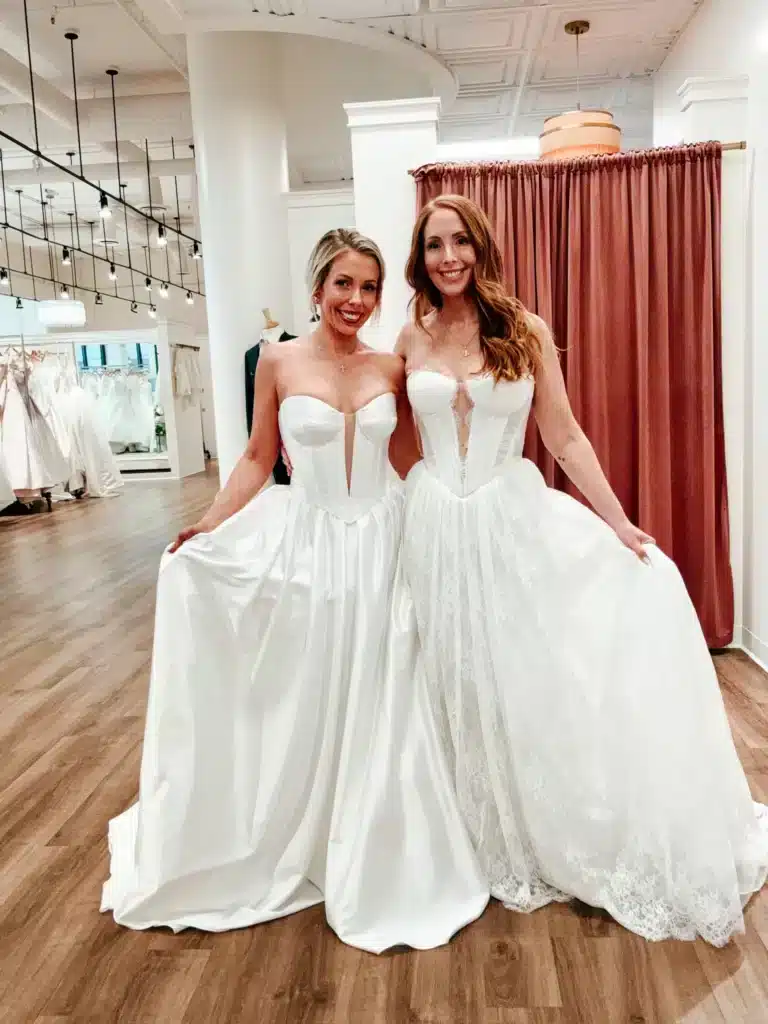
Here’s the honest answer: quite a lot of people, and that’s a big part of why this style keeps trending. That said, a few things genuinely matter more than others. Because the point sits below your natural waist, it tends to elongate the torso, which is why brides with a shorter torso often gravitate toward it immediately. Brides with a longer torso can wear it just as beautifully, especially paired with a ball gown or fit-and-flare skirt, where there’s enough length in the gown for that vertical line to fully play out.
But proportion tells you more than any general rule ever will, and that’s genuinely not something a blog post can determine for you. It’s something a stylist notices within seconds of you stepping into the dress, which is a big reason our team pulls basque waist options based on your actual body, not a size chart.
Best Fabrics and Silhouettes to Pair With a Basque Waist
Structure is the whole point here, so fabric choice matters more than it does with a softer waistline. Silk mikado and duchess satin are the classic pairing: both are firm enough to support the boning and hold that sharp point crisp all day, through photos, dancing, and everything in between. Lace overlays add texture and romance on top of that structure without softening the shape underneath it.
For skirts, a ball gown creates the most dramatic, fairy-tale version of this silhouette. An A-line softens that drama slightly while still showing off the point clearly. A fit-and-flare brings the whole look closer to the body for something sleeker and more modern. All three work. It really comes down to how much contrast you want between that sculpted top half and the movement below it.
The Fitting Reality: What to Expect With a Basque Waist Gown
Because the bodice is boned and structured, fit comes down almost entirely to your individual torso length, and this is where brides shopping without guidance can get caught off guard. A point that sits too high just reads as a natural waist and loses the elongating effect entirely. Too low, and that defining shape disappears into the skirt before it ever gets a chance to do its job. Getting the placement right is the actual difference between a gown that looks custom-made and one that simply almost fits.
Budget time and cost for alterations here, too. Basque waist placement adjustments take a skilled hand, and they’re not a quick fix the week before your wedding.
Basque Waist Gowns at Sophia’s Bridal & Tux
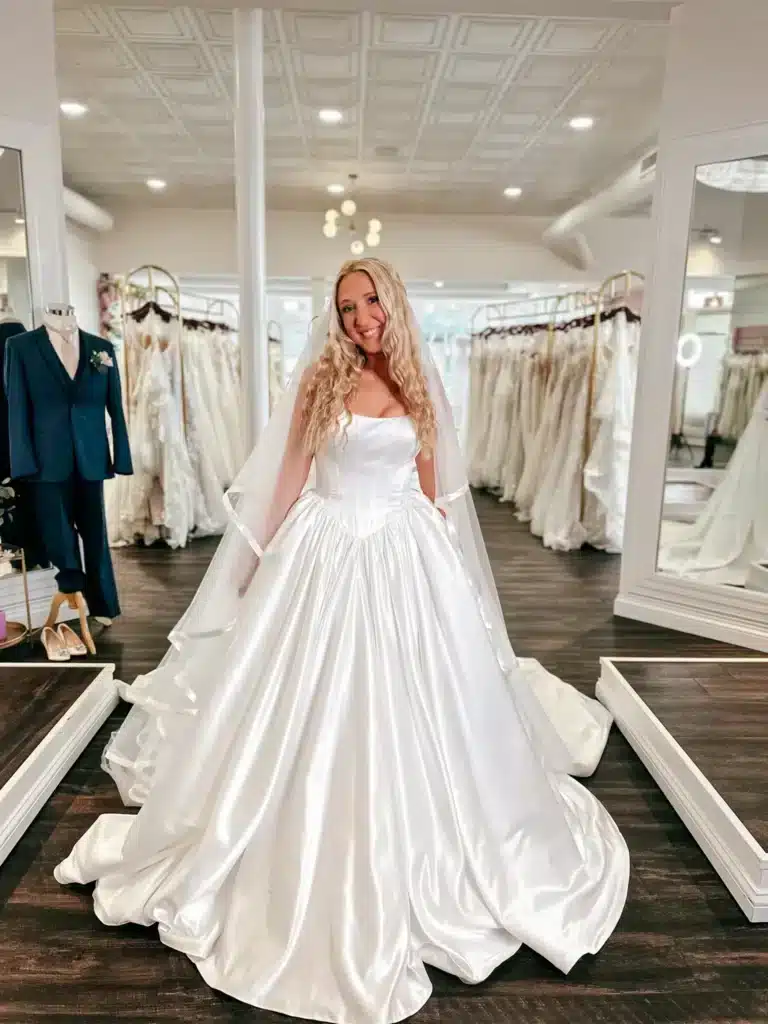
We carry basque waist styles across multiple designer lines at our Southport, Indianapolis location, from soft A-line takes to full-drama ball gowns.
Our stylists pull options based on your torso and proportions before you ever step on the platform, so you’re not guessing off a rack.
If you’re ready to see this silhouette on your own body, book an appointment to visit us and leave with your dream wedding dress.