
TLDR: The fabric of your wedding dress affects everything — how it moves, how it photographs, how comfortable you feel twelve hours in. At Sophia’s Bridal & Tux, our expertise will help you through this guide break down the most popular bridal fabrics in plain language so you can walk into any appointment feeling informed and confident, ready to shop with a clear picture of what actually works for you. No jargon, no gatekeeping— just the most popular fabrics explained clearly.
Why Your Wedding Dress Fabric Choice Matters More Than You Think
Most brides spend weeks researching silhouettes and styles before they ever think about wedding dress fabric — but fabric is actually the decision that shapes everything else. It determines how your dress drapes, how it holds up through an outdoor ceremony, and how it will look in photos taken in every kind of light.
The industry knows this. According to Research and Markets, the global bridal gowns market is valued at USD 40.9 billion in 2025 and projected to reach USD 92.6 billion by 2034 — a strong signal that quality expectations in wedding dress design have never been higher.
Your four main decision factors? Season, body type, budget, and yes — silhouette too. But fabric is the first filter. This guide covers all of them.
The Most Popular Bridal Fabrics Explained
Bridal fabrics fall into a handful of core categories, and each one behaves completely differently on the body. Understanding your options before you shop makes the entire process easier and less overwhelming.
Here is a plain-language breakdown of the dress fabrics you will most commonly encounter:
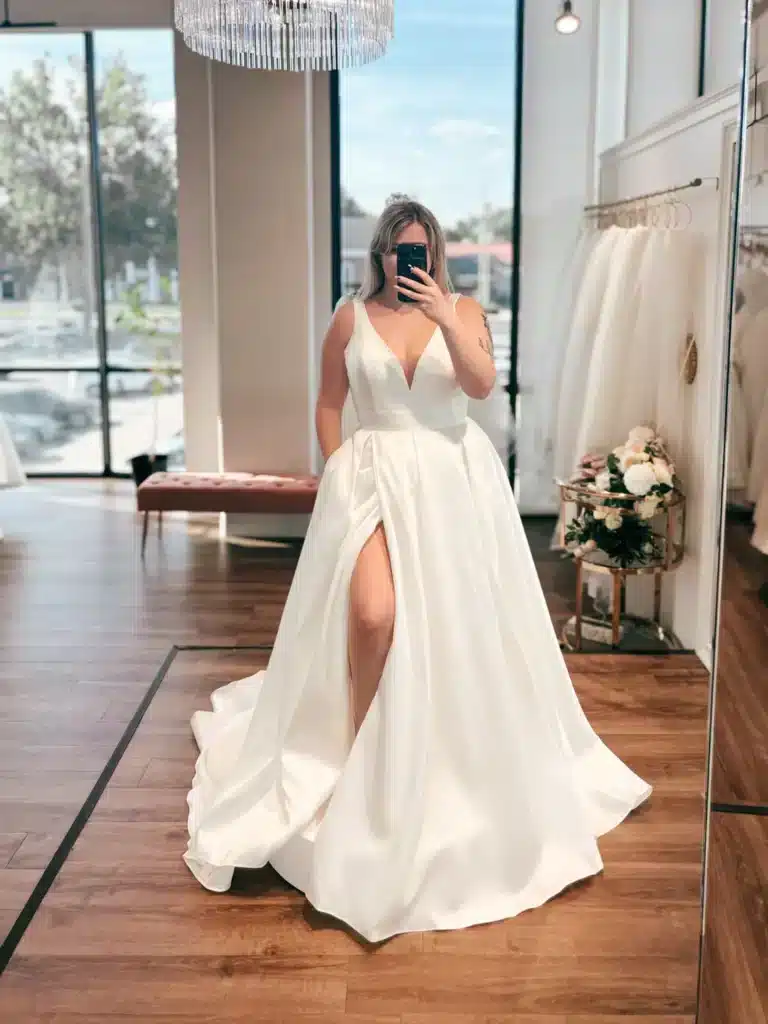
Satin is the classic choice — smooth, structured, and instantly recognizable. It delivers that polished, elevated bridal look many brides envision.
While you may come across Duchess satin, Charmeuse satin, or Peau de Soie in online research, these are less commonly used in modern bridal showrooms.
Crepe and stretch crepe are among the most popular modern bridal fabrics. They offer a clean, minimalist look similar to satin, but with more comfort and flexibility, making them a go-to for today’s brides.
Chiffon is sheer, airy, and floaty. It layers beautifully in skirts and is a go-to for boho and destination styles. It moves with you rather than holding a shape.
Lace is a full category of its own — covered in detail in the section below.
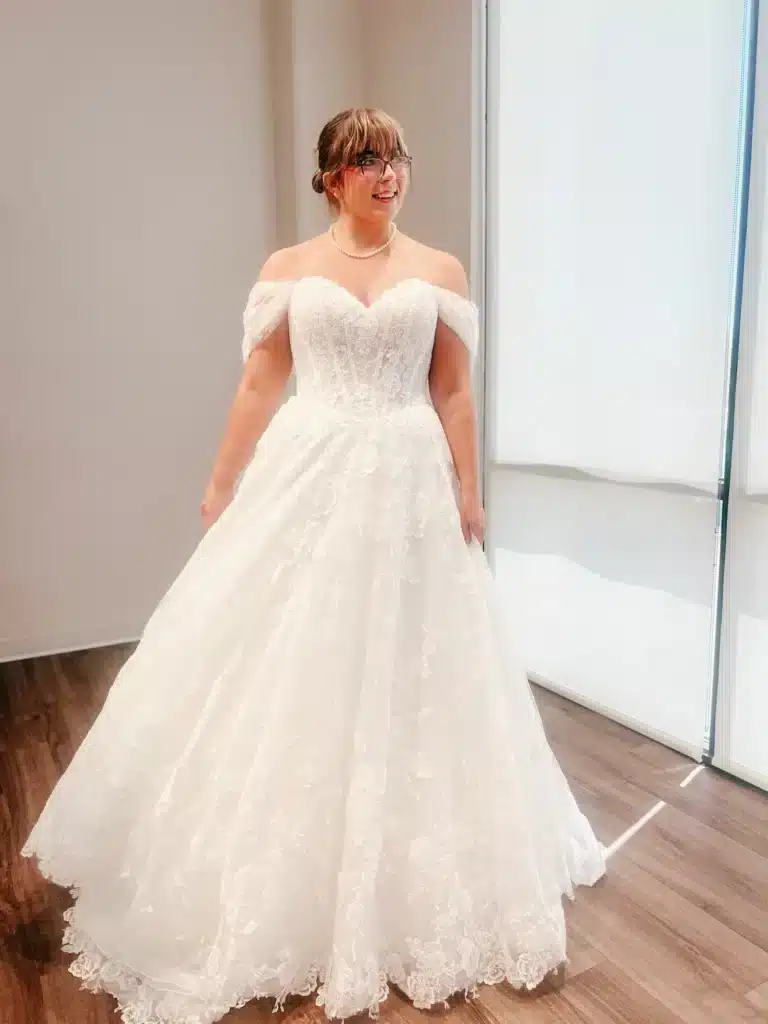
Tulle is the fabric behind that iconic ballgown volume. It is lightweight, stiff enough to hold shape, and almost universally flattering when layered well.
Organza is crisp and sheer with structure. It holds its form more firmly than chiffon and adds dimension without adding weight.
Mikado is a firm, smooth fabric with a polished finish. It is popular in modern, minimalist designs.
At a Glance: Bridal Fabric Comparison
| Fabric | Weight | Structured or Soft | Best Silhouette | Needs Lining? |
|---|---|---|---|---|
| Satin (Classic) | Medium–Heavy | Structured | Ball gown, A-line | Yes |
| Crepe / Stretch Crepe | Light–Medium | Soft | Column, fit-and-flare | Usually |
| Chiffon | Light | Soft | Boho, flowy layers | Yes |
| Tulle | Light | Semi-structured | Ball gown, A-line | Typically layered |
| Organza | Light–Medium | Structured | A-line, ball gown | Yes |
| Mikado | Medium–Heavy | Structured | Column, A-line | Usually |
A Bride’s Guide to Bridal Lace Fabric
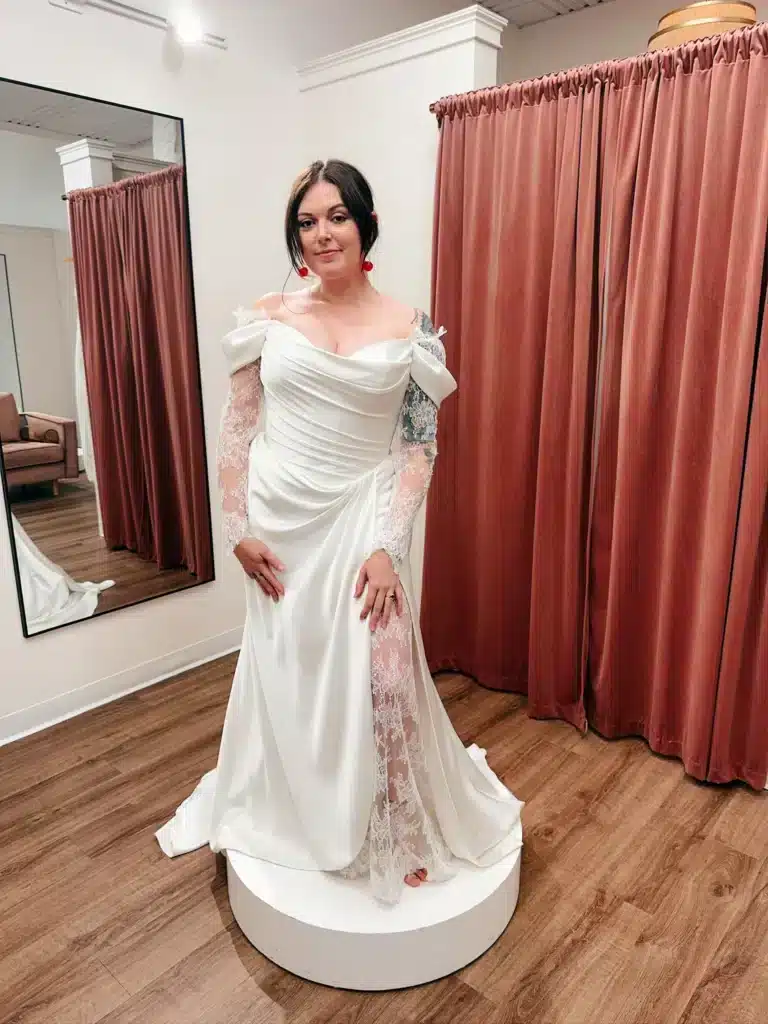
Lace is one of the most searched and most misunderstood categories in bridal fabric — and the differences between lace types genuinely matter for both your look and your budget.
Chantilly lace is fine, flat, and delicate with soft floral motifs on a net ground. It is the choice for romantic, ethereal aesthetics and is widely used in everything from veils to full gowns.
Guipure lace (also called Venetian lace) has no net background — the corded motifs connect directly to each other. This gives it a bold, structured look that can stand alone without underlining.
Alençon lace is re-embroidered onto a net base with a satin cord outline tracing each motif. It is the most traditional and formal of the three, often associated with heirloom-quality gowns.
Other styles you may encounter include corded lace, with its raised dimensional texture, and embroidered lace, which places stitched motifs directly onto a tulle or mesh base.
For brides who want to go further — beaded bridal lace is the luxury upgrade in this category. Hand-applied beading dramatically increases both the visual impact and the cost.
*Note: most lace types are sheer and require a lining or underlining layer, which adds to construction time and overall cost.*
How to Choose Wedding Dress Fabric for Your Body Type and Season
Before fabric, understanding your preferred wedding dress silhouette can help narrow your choices — then use fabric to support and enhance that shape. Soft, drapey options like Charmeuse and chiffon flow with your curves rather than compressing them, making them more comfortable and flattering for many figures.
Tulle adds volume to the lower half and is one of the most effective options for creating balance. Lace with a lining layer adds modest coverage while keeping the romantic texture that makes lace so beloved.
When it comes to specific figures, fabric behavior makes a real difference. Structured fabrics like Mikado or Duchess satin work beautifully for hourglass figures wanting clean definition and a polished silhouette. Chiffon layers, on the other hand, are a natural fit for pear shapes — they skim softly through the hip rather than clinging, adding graceful movement without adding visual weight.
Season and setting matter just as much. For summer and outdoor weddings, choose chiffon, organza, or lightweight lace — breathable fabrics that handle heat without wilting. For fall and winter weddings, Duchess satin, Mikado, and heavier laces bring warmth and structure.
For destination or humid climates, avoid heavy satin, which shows sweat and wrinkles easily; chiffon and polyester blends hold up far better. One final note for outdoor ceremonies: organza and tulle can appear more transparent in direct sunlight, so factor in lining choices before you finalize.
What Drives the Price of Bridal Fabrics
Price differences between wedding dress fabrics are real, and understanding why helps you make smarter value decisions
Four main factors drive fabric cost: fiber type, labor intensity, embellishment complexity, and fabric yield per yard — some fabrics require significantly more yardage to achieve a given silhouette, which multiplies material costs.
Fiber type is the biggest variable. Silk satin and silk chiffon look similar to their polyester counterparts in photos but feel entirely different and cost significantly more. The trade-off between silk and polyester is one of the most common budget decisions brides face.
Labor intensity matters for lace especially. Handmade Alençon lace requires skilled artisan hours; machine-made Chantilly does not. That difference shows up directly in price.
Embellishment adds cost quickly. Beaded bridal lace can cost several times more per yard than an unembellished lace of the same base construction.
Here is how fabric choices typically break down by price tier:
- Budget-friendly: Polyester chiffon, tulle, polyester organza
- Mid-range: Quality lace, crepe, stretch crepe, Mikado
- Luxury: Silk satin, silk chiffon, Alençon lace, beaded bridal lace
For brides working on a custom design, purchasing bridal fabric by the yard can be a cost-effective route — though it works best when paired with an experienced seamstress who understands bridal construction.
The fabric beneath every stitch is what makes a wedding dress feel like yours. Once you understand how each fabric moves, structures, and performs, the entire process of finding your dress becomes clearer and far more personal.
Choose the Right Wedding Dress Fabric with Sophia’s Bridal & Tux
Ready to feel the difference in person? Book a personalized bridal appointment with our stylists — we will help you compare fabrics in real life, on your body, so you leave knowing exactly what works for your day, your vision, and you.
Located in Indianapolis and Kentucky, our team would be happy to help you discover your dream wedding dress, helping you pick the right style and fabric for your big day!


0 Comments